

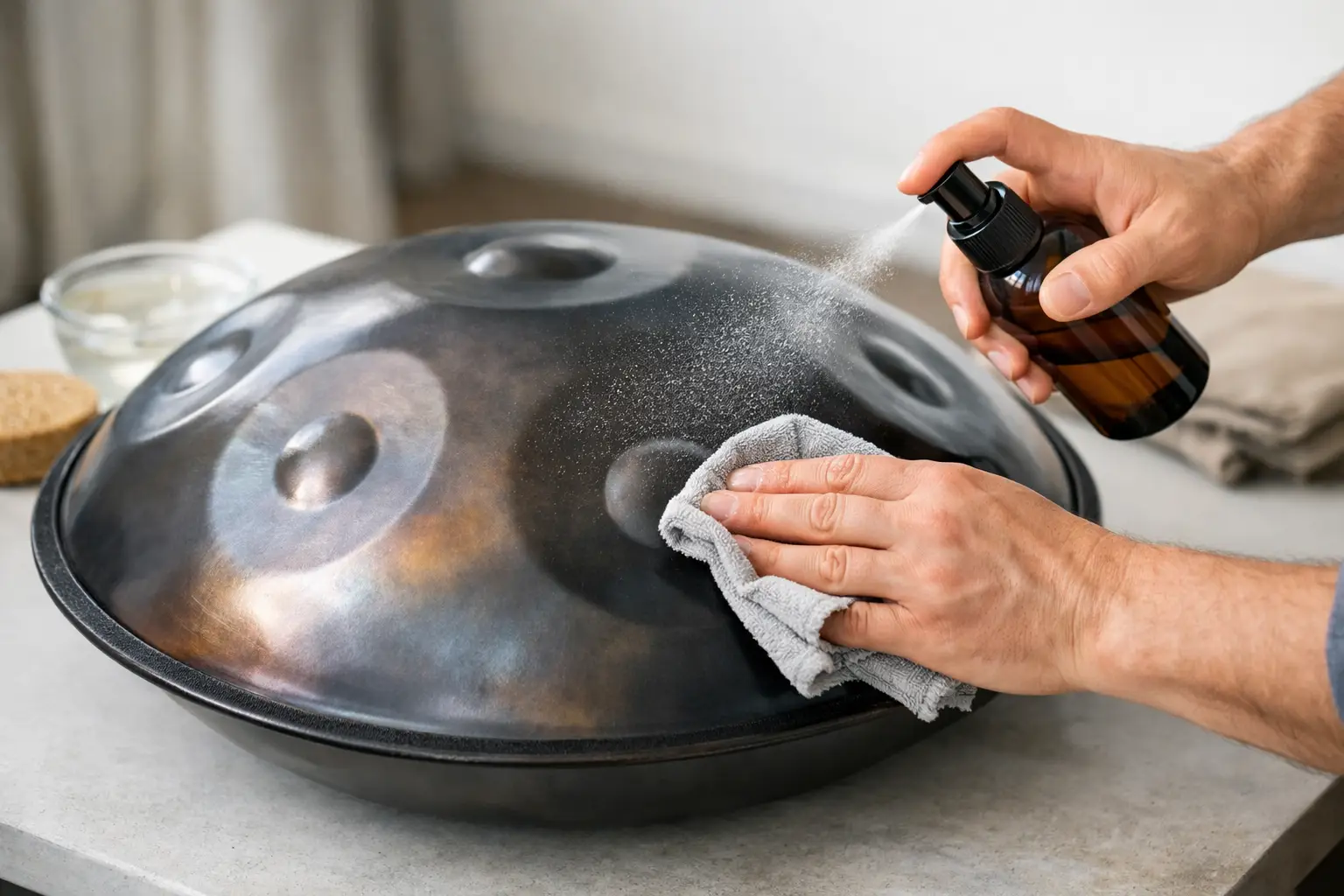
How to Clean a Handpan Without Dulling Its Tone
How to clean a Handpan
A handpan carries more than fingerprints. It holds the small traces of practice sessions, quiet moments after work, outdoor circles and the rhythms that arrived when you were not trying to make anything perfect. Knowing how to clean a handpan helps preserve that connection – and protects the steel beneath your hands from moisture, salt and surface grime.
The good news is that handpan care is usually simple. The less helpful news is that there is no single cleaning product that suits every instrument. Steel type, protective coating and your local conditions all matter. A nitrided handpan in dry inland Australia may need very different care from a raw steel instrument played near the coast.
Why regular handpan cleaning matters
Your hands naturally leave behind perspiration, skin oils and traces of whatever else they have touched during the day. Over time, that residue can make the surface look patchy and, on susceptible steels, create conditions where rust develops. Coastal air, humid weather and rapid temperature changes can speed this up.
Cleaning is not about making a handpan look factory-new after every play. A well-loved instrument may develop a little character. It is about removing what does not belong there, maintaining its protective layer and giving yourself a chance to notice early signs of corrosion, marks or changes in the finish.
A clean playing surface also feels better beneath the fingers. When your hands meet smooth, cared-for steel, it is easier to settle into the instrument’s resonance and let a simple pattern become a moment of calm.
How to clean a handpan safely
Before using any cleaner or oil, check the advice supplied by your handpan maker. This is especially important if your instrument has a specialised finish, a powder coating, painted details or a stainless steel shell. The wrong product can leave residue, affect the finish or make later maintenance harder.
For most handpans, begin with the gentlest approach and only move to stronger treatment when necessary.
Start with a dry microfibre cloth
After each playing session, or at least every few sessions, wipe the whole instrument with a clean, soft microfibre cloth. Work over the top shell, the sides and the underside. Pay gentle attention around the tone fields and central note, where fingerprints can be easy to miss.
Use light pressure. You are lifting surface moisture and oils, not polishing the metal. Avoid paper towel, tissues and rough cloths, as they can leave fibres behind or create fine scratches over time.
If you play in a humid room, take your handpan outside, or bring it to a yoga or sound session, this quick wipe-down is particularly worthwhile. Let the instrument return to room temperature before packing it away if it has become cool from the air-conditioning or warm from the sun.
Deal with stubborn marks carefully
If a dry cloth does not remove a mark, use only a small amount of the cleaning solution recommended by your maker. Apply it to the cloth rather than spraying directly onto the handpan. This gives you more control and keeps liquid away from seams, ports and any areas where it could linger.
For some bare or nitrided steel handpans, a maker-approved alcohol-based cleaner may be suitable for removing stubborn grease. However, this is not a universal rule. Alcohol can strip away protective oils, and some finishes should never be treated with it. Always follow the guidance specific to your instrument, then reapply its recommended protective treatment if required.
Never reach for household spray cleaner, window cleaner, metal polish, abrasive cream, steel wool or a scouring pad. These products can be far harsher than they seem. A bright, freshly polished surface is not worth the risk of damaging the handpan’s finish or exposing the steel to future corrosion.
Apply protective oil only when your handpan needs it
Many handpans made from nitrided or raw steel benefit from a very light application of a maker-approved protective oil. How often depends on the climate, how frequently you play and the type of steel. For some players, once a month is enough; for others living close to the ocean or in a humid region, a shorter interval makes sense.
Apply a few drops to a clean microfibre cloth, then spread the oil in an extremely thin, even layer across the instrument. Leave it for the period recommended by the product or maker, then buff away all excess with another clean cloth. The surface should feel dry and smooth, not slick or sticky.
More oil is not better. Heavy applications attract dust, leave smears and can build up around the note fields. If you can see obvious streaks or feel residue on your fingertips, keep buffing with a dry cloth.
Stainless steel handpans are generally more resistant to rust, but they are not maintenance-free. Fingerprints and salt can still affect their appearance, particularly in coastal Australia. A regular dry wipe and the maker’s care advice remain the best starting point.
What to do if you spot rust
A tiny orange or brown spot can feel alarming, but early attention is usually far more effective than waiting. First, do not scrub at it with anything abrasive. Aggressive rubbing can mark the surface and remove more of the protective layer than the rust itself.
Take a clear photo and contact the instrument maker or a trusted handpan specialist for advice suited to that finish. They may recommend a particular rust-removal process, a protective oil or professional assessment. This matters because handpans are carefully tuned acoustic instruments, not ordinary steel cookware or garden tools.
If the affected area grows, feels raised, appears near a seam or is accompanied by flaking finish, stop experimenting with home remedies. Professional care is the safer choice.
Storage habits that protect your handpan
Cleaning works best alongside sensible storage. Place the handpan in a quality padded case when it is not being played, but make sure the instrument is completely dry first. Trapping moisture inside a closed bag can undo the care you have just given it.
Keep it indoors in a stable, dry space where possible. Avoid leaving it in a hot car, a damp garage, beside an open window during rain or directly on a cold concrete floor. Australian summers can heat a vehicle quickly, and extreme heat is not kind to steel, finishes or tuning stability.
If you live near the sea, play outdoors often or notice condensation in the case, inspect the handpan more frequently. A small reusable moisture absorber in the case can be useful, provided it does not touch the instrument and is replaced or dried as directed.
It also helps to keep the case clean. Shake out sand, dust and loose debris before putting the handpan away. Grit caught between the instrument and its padding can cause cosmetic marks during transport.
A simple care rhythm for regular players
You do not need to turn maintenance into a ritual that interrupts your relationship with music. For most players, a quick dry wipe after playing and a more careful inspection every few weeks is enough to catch problems early. If your handpan is played daily, carried to performances or used in wellness settings by many hands, make the routine more frequent.
Listen with your eyes as well as your ears. Look for fingerprints that will not lift, dull patches, unusual spots and residue around the rim. Then listen for any meaningful change in sustain, buzz or note response. Cleaning will not fix a tuning issue, but noticing a change early gives you better information when seeking help.
Your handpan does not need perfection to sing beautifully. It needs thoughtful handling, a dry soft cloth and a little attention between the moments when you let its notes fill the room.