

Handpan Tuning Explained for Clearer Playing
Handpan Tuning Explained for Clearer Playing
A handpan can feel beautifully intuitive from the first touch, yet the sound beneath your hands is the result of remarkably precise work. Handpan tuning explained simply means understanding how each tone is shaped, how those tones relate to one another, and why a well-made instrument can feel so calm and complete to play.
You do not need formal music theory to enjoy a handpan. In fact, many players are drawn to it because it invites melody and rhythm without demanding that you read notation first. Still, knowing a little about tuning helps you listen more deeply, choose an instrument with confidence, and care for its voice over time.
What handpan tuning actually means
Tuning is not just the process of making a note higher or lower. On a handpan, each tone field is carefully formed in the steel so it produces a central pitch alongside supporting tones called overtones or partials. These layers are a large part of what gives the instrument its warm, rounded and almost vocal character.
A typical handpan has a central note, known as the ding, surrounded by a circle of tone fields. Each field is tuned to a particular note within a scale. When you strike it with a relaxed hand, you may hear the main note first, followed by a gentle shimmer above it. That shimmer is not an accident. It is part of the instrument’s musical design.
Many handpan tone fields are tuned with a fundamental note, an octave above it, and a compound fifth. The exact balance varies between makers, steel types and playing styles, but the aim is the same: a note that is clear, resonant and satisfying without being harsh. Tuning is therefore both technical and deeply musical. A maker is shaping pitch, sustain, volume and character at once.
Why a handpan sounds harmonious so quickly
Most handpans are built around a selected scale rather than a full chromatic collection of notes. This means the notes have already been chosen to work together. You can move between tone fields freely, repeat a simple rhythm, or pause and let one note breathe, and the instrument tends to maintain a sense of cohesion.
A D Kurd handpan, for example, has a different emotional colour from an E minor or Celtic scale instrument, but each is arranged to make improvisation approachable. Some scales feel earthy and meditative. Others are brighter, more spacious or more suited to lively rhythmic playing. Tuning creates the framework, while your touch brings the music to life.
This does not mean every combination will sound identical. Timing, dynamics and which notes you choose to emphasise all matter. A handpan offers freedom, but it is a freedom held within a thoughtful musical landscape. That balance is why it can be so inviting for beginners while remaining expressive enough for experienced musicians.
The ding is more than the centre note
The ding is usually the visual and musical heart of the instrument. It anchors the scale and often provides a low, resonant foundation for your playing. Depending on the scale, it may feel restful and grounding, or it may create a gentle tension that invites the surrounding notes to resolve.
Because the ding carries so much energy, it should be played with care. A confident but relaxed strike lets it bloom. Hitting it too hard will not make it more musical. It may instead produce a clipped sound, unwanted metallic attack, or unnecessary stress on the instrument.
Tone fields hold more than one pitch
When a handpan note sounds full and alive, you are hearing more than a single frequency. The maker has balanced the note’s internal relationships so the fundamental and higher tones speak together. A player may not consciously identify each layer, but they feel the result as clarity, warmth and resonance.
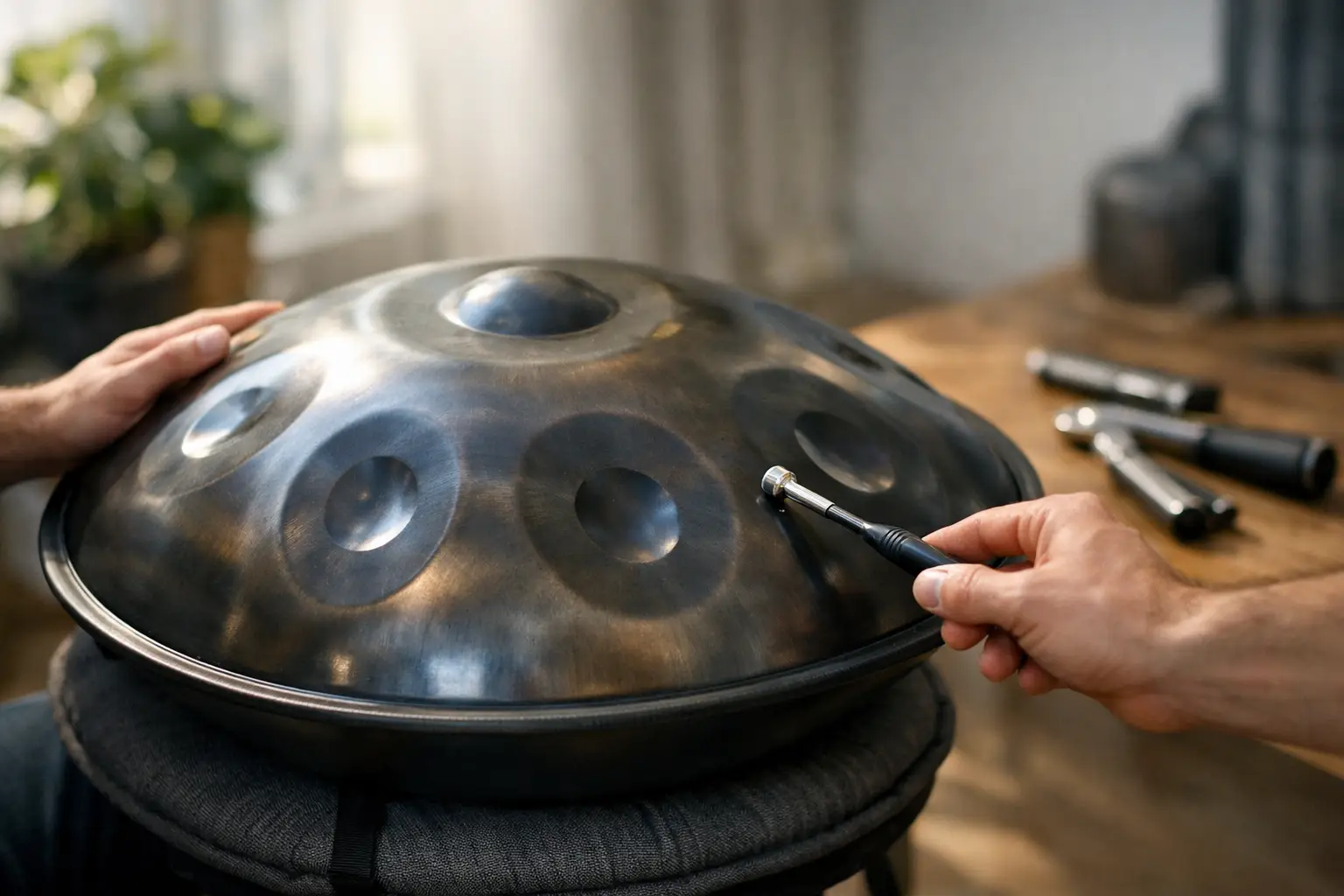
This is also why handpan tuning is so specialised. It is not comparable to turning a guitar machine head or adjusting a violin string. The pitch lives in the shape and tension of the steel itself. Retuning requires trained ears, dedicated tools and a detailed understanding of how one adjustment can affect neighbouring notes.
How makers tune a handpan
A handpan begins as carefully selected steel that is formed, shaped, heat-treated and tuned through repeated, highly controlled stages. The exact methods are closely tied to each maker’s craft, but the broad principle is that the steel is worked until every tone field reaches the intended pitch and response.
During tuning, a maker may use precise hammer work and measurement tools, checking not only whether a note is technically in tune but also whether it behaves musically. Does it open easily under a light touch? Does it sustain without becoming muddy? Does the octave remain present? Does it sit comfortably beside the notes around it?
That final question matters greatly. A handpan is a connected system. Changing one tone field can influence another, especially when notes sit close together. A beautifully tuned handpan is therefore not a collection of separate notes. It is a carefully balanced whole.
The steel itself also makes a difference. Nitrided steel and stainless steel are both used in handpan construction, and each can offer a distinct feel, sustain and response. Neither is automatically better for every player. The scale, maker’s approach, environment and the sound you are seeking all play a role.
Does handpan tuning change over time?
Even an excellent handpan is not completely immune to change. Steel responds to force, temperature, moisture and time. Regular playing with good technique is generally not a problem, but repeated heavy striking, accidental drops or pressure from transport can shift a note away from its intended pitch.
A handpan that needs attention may begin to sound slightly dull, unstable or unusually sharp or flat. You might notice that one note no longer blends with the scale, has less sustain than before, or produces a distracting secondary sound. These changes can be subtle at first, particularly if you hear your instrument every day.
Temperature can also affect how an instrument feels and sounds in the moment. If you have brought a handpan from a hot car into a cool room, give it time to settle before judging it. Short-term changes in response are not always a sign that the instrument is permanently out of tune.
Caring for the tuning you have
The most useful protection is thoughtful playing. Let your hands stay loose and use a light, springy touch rather than force. Handpans respond best to technique, not brute strength. A soft strike in the right place can create more colour than a hard hit ever will.
For transport, use a well-padded hard case or quality protective bag, and do not leave the instrument where it can roll, fall or be bumped by other gear. Avoid resting heavy objects on top of it. A handpan may look sturdy, but the tuned areas are finely shaped and deserve the same care you would give any acoustic instrument.
Moisture and surface care also matter. Wipe fingerprints and perspiration away after playing, especially in coastal areas or humid conditions. Follow the care guidance appropriate to your handpan’s steel and finish, and store it somewhere dry and stable rather than in a damp shed, a hot vehicle or near drastic temperature swings.
Can you tune a handpan yourself?
For almost every owner, the answer is no. It can be tempting to think a small knock or adjustment might restore a note, but home retuning can cause far more damage than the original issue. A handpan’s notes are interconnected, and striking the steel in the wrong area can alter its response, flatten its tone or create problems that require significant professional repair.
If you suspect your handpan is out of tune, record a short clip of the affected note and compare it with older recordings if you have them. Then speak with a qualified handpan tuner or the maker where possible. They can help determine whether what you are hearing is a true tuning issue, a temporary environmental change, or simply a shift in playing technique.
A handpan does not need to be treated nervously. It is made to be played, explored and woven into daily life. Give it a relaxed touch, a safe place to rest and a little attention after each session, and its tuning can continue to support the quiet moments, shared circles and spontaneous melodies that make the instrument so special.