

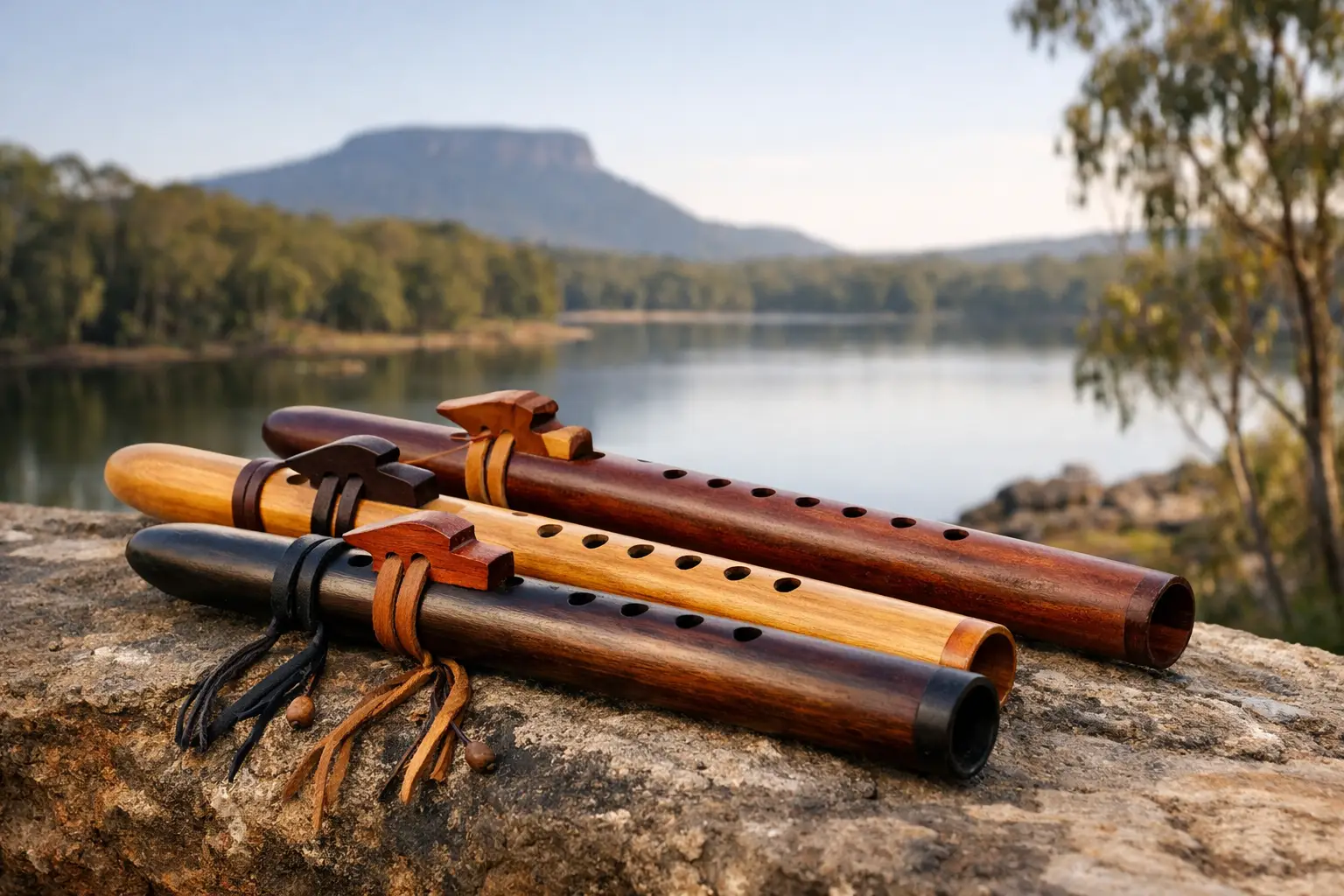
Best Native Flutes for Beginners in Australia
Best Native Flutes for Beginners in Australia
A good first flute should invite you back tomorrow. That is the real measure when choosing the best native flutes for beginners: not whether the instrument looks impressive on a stand, but whether it feels comfortable in your hands and gives you a warm, satisfying voice from the first gentle breath.
Native American-style flutes are wonderfully approachable because their tuning supports musical exploration without demanding years of theory. A few notes can become a slow meditation, a melody between handpan phrases, or a grounding moment before a yoga or sound session. Still, small differences in key, size and craftsmanship can make one flute feel like a natural companion and another feel frustrating.
What makes a native flute beginner-friendly?
The most welcoming instruments balance comfort with resonance. They should speak easily at a relaxed breath pressure, have holes your fingers can reach without strain, and arrive properly tuned. These qualities matter more than decorative carving, timber rarity or having the lowest, biggest sound in the room.
Most Native American-style flutes are tuned to a pentatonic scale. Put simply, the notes are chosen to work beautifully together. You can lift fingers, pause, repeat a phrase and follow your ear without constantly landing on a harsh note. That forgiving nature makes the flute especially appealing for adults returning to music, handpan players seeking a melodic partner, and anyone who wants to make sound for calm rather than correction.
A well-made flute also has a clear, stable voice across its range. The lower notes should not require a forceful blast, while the higher notes should arrive with patient breath control rather than tension in your shoulders. If playing feels like a wrestling match, it is usually the wrong size, a difficult design, or a flute that has not been made with sufficient care.
The best native flutes for beginners start with the right key
Key is the decision that shapes almost everything: pitch, physical size, finger stretch and the character of the sound. There is no single best choice for every person, but a few keys consistently make a kind starting point.
Key of A: the balanced first choice
For many adults, an A flute is the sweet spot. It has a mellow, rounded tone without becoming too long to hold comfortably. Its holes are generally manageable for average-sized hands, and it is low enough to feel soothing while still carrying a clear melodic presence.
If you are buying your first flute without the chance to try several, key of A is often the safest all-round recommendation. It suits reflective solo playing, gentle improvisation and pairing with a range of handpans and tongue drums.
Key of G: a little brighter and more compact
A G flute sits slightly higher than A, which usually means a shorter body and a smaller stretch between the holes. This can be a thoughtful option for players with smaller hands, young adults, or anyone concerned about comfort. The sound is a touch brighter and more birdlike, yet it can still feel peaceful and full.
G is not automatically easier in every way. Higher flutes can be a little more responsive to changes in breath, so the tone may reveal a rushed or uneven exhale sooner. That is not a flaw – it simply rewards slow, steady breathing.
Key of F sharp: deeper, with a bigger reach
F sharp has a darker, more spacious voice. Many players fall in love with its earthy resonance, particularly for meditation, sound-based wellbeing and unhurried solo pieces. However, it is longer than an A or G flute, and the finger spacing can be a stretch for smaller hands.
Choose F sharp as a first flute if its deeper sound genuinely calls to you and you can comfortably span the holes. A flute that inspires you will encourage more practice, but physical ease still needs to come first.
Very low keys and high keys
Low keys such as E or D can sound beautifully rich, almost like a quiet human voice, but they are typically large and demand a wider hand position. They are often better as a second flute once you know what feels good. Very high flutes are compact and bright, though their lighter sound may not be what someone imagines when they are seeking the traditional, breathy warmth of this instrument family.
Choose six holes unless you have a reason not to
A six-hole flute is a practical first choice for most learners. It gives you access to the familiar pentatonic scale while also allowing extra notes and expressive options as your confidence grows. You do not need to understand all of that immediately – you can begin by covering the holes, lifting one finger at a time and listening.
Five-hole flutes are equally musical and can feel beautifully simple. Their layout may suit players who want an especially uncluttered entry point or whose hands are more comfortable with fewer holes. The trade-off is a slightly narrower set of musical choices. Neither design is more authentic or more meaningful; the better fit is the one that lets you play with freedom.
Timber, bamboo and the feeling of the instrument
Material affects both tone and the relationship you form with the flute. Timber flutes are popular for their warmth, tactile presence and individual grain. Cedar is often admired for its soft, aromatic character, while denser timbers can bring a more focused, clear tone. Each piece of wood has its own personality, so two flutes in the same key may not sound identical.
Bamboo flutes can be lighter, more affordable and wonderfully resonant. They often have an organic, airy voice and make a lovely starting point, particularly if you are curious and want to explore before investing in a more substantial timber instrument. Their construction quality still matters greatly. Look for smooth finger holes, a securely fitted block and a finish that feels comfortable rather than sticky or rough.
Do not choose material on sound alone. Hold the flute if possible, or check its length and hole spacing carefully when buying online. The instrument should feel settled in your hands, with your wrists relaxed and fingers naturally curved.
Craftsmanship matters more than ornament
A flute can be richly decorated and still be difficult to play. For beginners, dependable tuning, clean airflow and thoughtful ergonomics are the real signs of quality. The block – the small piece on top that channels air across the sound hole – needs to sit securely in the right position. A poorly fitted block can leave the flute breathy, unstable or reluctant to speak.
Ask whether the flute is tuned to a recognised concert pitch, commonly A=440 Hz. This makes it easier to play with other instruments, including handpans, guitars and ambient backing tracks. Some makers offer alternative tunings for particular tonal qualities, which can be beautiful, but standard concert pitch is the simplest place to start if you hope to play with others.
Also consider finish and care. Wood responds to changes in humidity and temperature, especially in Australia’s varied climate. A quality flute should come with clear care guidance. Avoid leaving it in a hot car, storing it damp after playing, or over-oiling it. A few mindful habits will protect its voice for years.
Begin with breath, not a songbook
When your flute arrives, resist the urge to chase a complicated tune. Cover all the holes gently, form a relaxed seal with your lips, and let out a warm, slow breath. The first goal is a steady note that feels centred. Then lift one finger, listen to the change, and leave space between each sound.
This is where the flute becomes more than a scale pattern. You can let a phrase answer the rhythm of your breath, echo a handpan’s sustained note, or create a quiet opening for a meditation session. A pentatonic flute gives you room to improvise, but listening is what gives those notes meaning.
Try recording a few minutes after your first week. You will hear small changes in breath control and confidence that are easy to miss while you play. The most useful practice is often ten unhurried minutes a day, rather than one long session that leaves your hands tired.
A respectful note on naming and tradition
Native American flutes belong to living Indigenous cultural traditions across North America. Their history, construction and musical roles are deeper than any one product category. When selecting an instrument, it is worth knowing whether it has been made by an Indigenous maker, a specialist contemporary maker, or is a Native American-style flute informed by the broader design tradition.
Respectful curiosity adds value to the experience. Learn about the maker where that information is available, avoid treating cultural motifs as mere decoration, and let the instrument be a doorway to listening as well as playing. The calm many people find in flute music comes not from a shortcut, but from attention, breath and repetition.
The right first flute does not need to be the biggest, lowest or most ornate one. Choose the key that your hands can comfortably hold, the sound that makes you pause, and an instrument made well enough to meet you with an honest note. From there, a single breath can become the beginning of your own musical language.