

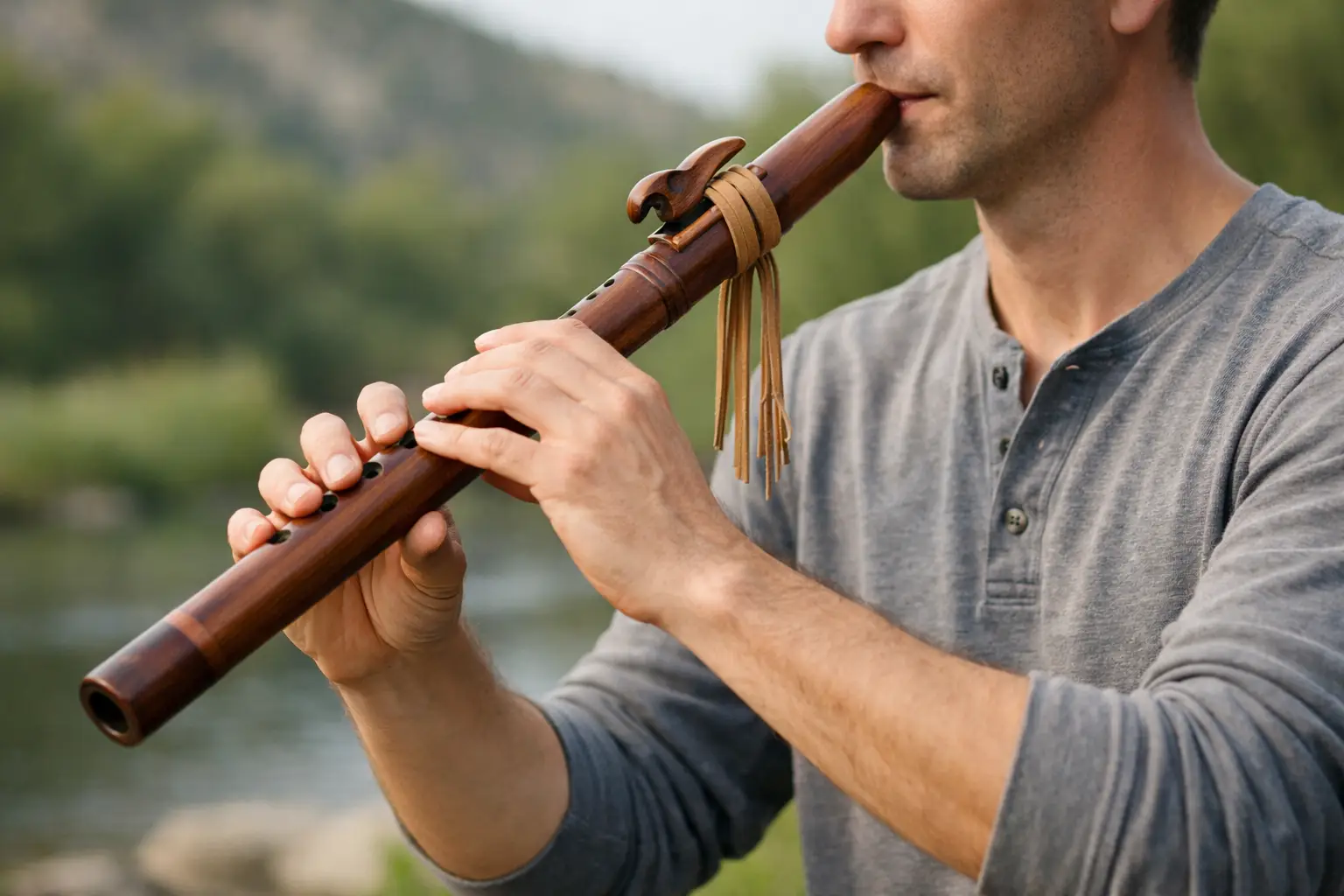
Native Flute Posture Tips for Open, Easy Playing
Native Flute Posture Tips for Open, Easy Playing
A Native American flute can make a gentle, singing sound with surprisingly little effort, but only when your body has room to breathe with it. These native flute posture tips are not about holding yourself rigidly still. They are about finding a balanced, comfortable position so your breath, hands and attention can settle into the music.
For many players, this instrument becomes part of a quiet morning ritual, a sound healing session, a walk beside the water, or an intimate performance. In each setting, good posture helps the flute feel like an extension of your body rather than something you have to wrestle into tune.
Begin with balance, not stiffness
Whether you play seated or standing, let your feet create a stable base. When standing, place them about hip-width apart, with your knees soft rather than locked. Let your weight rest evenly through both feet. You do not need a formal stage stance – just enough grounding that your upper body can remain free.
When sitting, choose a chair that allows both feet to meet the floor. Perching on the front half of the seat often works well because it keeps the pelvis neutral and the spine naturally long. A deep lounge chair may be perfect for listening, but it tends to round the lower back and compress the breath needed for playing.
Think of length through the spine rather than pulling your shoulders backwards. If you try to “sit up straight” by tightening your chest, your neck and jaw may follow. Instead, allow the crown of your head to float upwards while your ribs stay soft. It is a quieter adjustment, but it gives your breath more space.
Hold the flute at a natural angle
Bring the flute to you. This simple idea prevents one of the most common habits among beginners: lowering the head and reaching down towards the instrument. When your chin tips towards your chest, the throat can narrow and the shoulders soon become tense.
Raise the flute until the mouthpiece meets your lips comfortably. For most players, the instrument will angle slightly downwards from the mouth rather than sitting perfectly horizontal. The exact angle depends on your height, arm length, flute size and whether you are seated or standing. There is no prize for copying another player’s position exactly.
Your head should feel balanced over your neck, with the gaze generally forward or slightly down. If you need to crane your neck to see your fingers, pause and check the flute’s angle instead. With time, your hands will learn the hole positions by feel, freeing you to listen rather than constantly look.
Let the shoulders fall
A raised shoulder is often a sign that the flute is being supported by tension instead of balance. Before you play, breathe in gently, then let the shoulders drop as you breathe out. Notice whether one shoulder lifts higher, particularly the arm supporting the lower end of the flute.
The elbows do not need to hug your sides, nor should they flare out dramatically. Let them hang in a loose, useful middle position. This creates enough room for the wrists to stay neutral and for your fingers to move quietly across the holes.
Keep your wrists soft and your fingers curved
Clear notes rely on properly covered finger holes, yet pressing hard is rarely the answer. Shape each finger with a relaxed curve, then place the soft pads over the holes. Imagine resting your fingers on still water rather than pushing buttons.
Avoid bending the wrists sharply inwards or upwards. A straight, easy line from forearm through wrist to hand helps reduce fatigue, particularly during longer meditative playing or repeated practice sessions. If your wrists ache, it may mean the flute is too far from your body, too low, or angled in a way that forces the hands to compensate.
Keep the thumbs relaxed as well. They provide support, but they should not clamp the flute. A tight grip can make finger movement slow and may create an unsteady tone as you shift between notes.
For players with smaller hands, arthritis, previous injuries or limited mobility, comfort matters more than a textbook hand shape. Try playing while seated, using a slightly different flute angle, or taking shorter sessions with breaks. A well-matched flute size also makes a significant difference. The right instrument should invite exploration, not leave your hands strained after ten minutes.
Make room for an unhurried breath
The Native American flute generally responds best to a calm, steady stream of air. Posture supports this by leaving the belly, ribs and chest free to expand naturally. You do not need to force a huge breath or inflate your chest. Forced breathing can make the sound airy, sharp or unstable.
Try this before playing a first note. Rest the flute in position, soften your jaw, and breathe in low and quietly. As you breathe out, begin the note with a gentle stream of air. Let the sound arrive rather than attacking it.
If the tone keeps breaking, check your body before blaming your breath. Are you leaning forwards? Is your jaw clenched? Have your shoulders crept up? Are you holding your stomach tightly? Often, a small reset creates a more centred tone than simply blowing harder.
Leave space between phrases
Players who come to the flute through meditation, yoga or sound-based wellbeing often have a natural feel for space. Let that instinct guide your phrasing. A pause is not empty time or a mistake to be filled. It gives your hands a chance to release, your body a chance to reset, and the previous note a moment to fade.
This is especially useful when improvising. Rather than trying to keep a continuous stream of notes going, play a short phrase, breathe, and listen. The next phrase often becomes clearer when you allow your posture and breath to settle first.
Seated versus standing: choose for the moment
Seated playing is ideal for slow practice, reflective sessions and learning new finger patterns. It can feel grounded and helps many beginners notice unnecessary tension. Keep the feet planted and avoid curling around the flute, particularly if you are sitting on the edge of a bed or couch.
Standing can bring more freedom to the breath and makes it easier to connect with an audience or move with the rhythm. It is useful for performance, outdoor playing and sound journeys where you may be walking around a space. The trade-off is that players sometimes sway or shift their weight without noticing, which can make the flute angle inconsistent.
Neither position is better in every circumstance. Use seated practice to build awareness, then spend time standing once your hands know the flute more confidently. Your posture should serve the music you are making, not become another rule to manage.
A simple body check before you play
Take ten seconds before each session to notice four things: your feet are supported, your spine is comfortably long, your shoulders are low, and your wrists are easy. Then bring the flute up, rather than lowering yourself down to it.
Check again after a few minutes. Tension is not always present at the beginning of a session. It can appear when you are concentrating on a new melody, reaching for higher notes, or trying to play quietly. Brief check-ins help you catch it before it becomes soreness.
Respect the instrument’s voice and your own body
The Native American flute carries a rich cultural history, and playing it with care includes listening closely to its voice rather than trying to overpower it. A relaxed posture supports that kind of listening. It allows the breath to be gentle, the notes to be intentional, and the silences to feel as musical as the sound.
If you’re looking for an instrument that feels comfortable in your hands from the beginning, explore our Native American style flutes and compare the available sizes, keys and designs. Choosing a flute that suits your reach and playing position can make a meaningful difference to how naturally your posture develops
Over time, the best posture will become less visible. Your hands will find their places, your breath will move more freely, and the flute will rest in your body with quiet familiarity. Let comfort be your guide. When you feel at ease, there is more room for the warm, personal resonance that makes each phrase your own.