

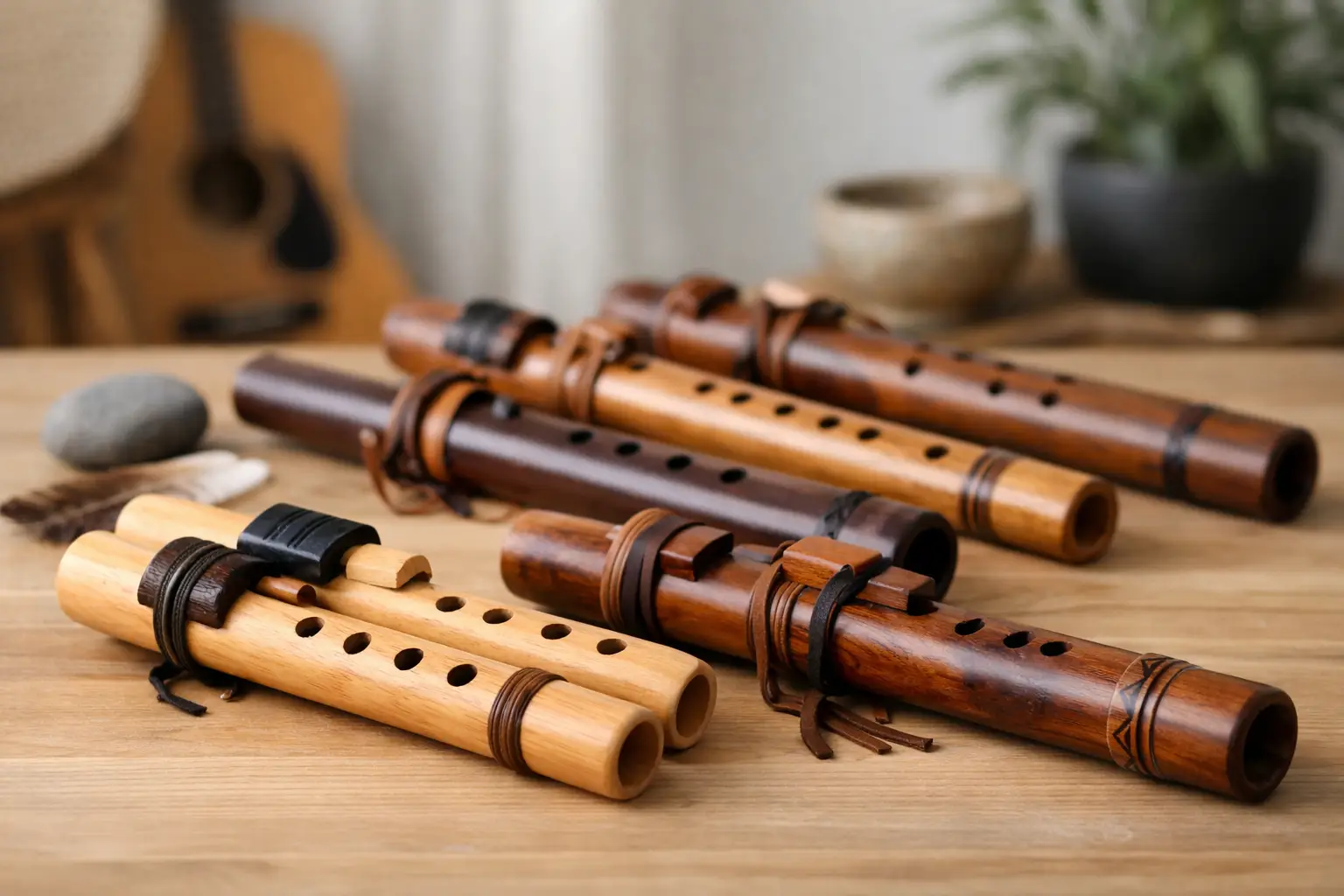
Drone Flute Selection Guide for First-Time Players
Drone Flute Selection Guide for First-Time Players
A drone flute creates a small sound world in your hands: one voice carries the melody while another holds a steady, grounding note beneath it. This drone flute selection guide is designed to help you choose an instrument that feels inviting from the first breath, whether you are drawn to quiet personal practice, sound-based wellbeing, recording or performance.
Unlike a standard Native American-style flute, a drone flute has two parallel chambers. The melody side is fingered in the familiar way, while the drone side provides a sustained tonal foundation. That extra layer can sound spacious and meditative, but it also changes the weight, reach and playing experience. The best choice is not automatically the deepest or most ornate flute. It is the one whose voice, size and tuning suit the way you want to make music.
Start with the sound you want to live with
Before comparing timber, keys or decorative details, listen for the emotional character that calls to you. A drone flute naturally creates a sense of continuity. The sustained note can support slow melodies, reflective improvisation and breath-led musical phrases without needing accompaniment.
For meditation, yoga or gentle sound journeys, many players enjoy a lower, warmer register. The drone sits beneath the melody like a calm current, leaving plenty of room for pauses and soft dynamics. For personal creativity, songwriting or playing alongside handpan and tongue drum, a mid-range flute often brings more clarity and presence. It can still feel earthy and resonant, while being easier to place within a mix.
There is no universal ‘healing’ key or one perfect frequency. Your relationship with the instrument matters more than a promise attached to a note. Choose a sound that makes you want to pick it up regularly. Consistent, attentive playing is where the deeper connection develops.
Choose a key that suits your hands and your ear
The key is one of the most meaningful decisions in any drone flute selection guide. It shapes the flute’s pitch, mood, physical size and how readily it may blend with other instruments.
Higher keys are generally smaller and lighter. They tend to speak easily with less air and offer a bright, clear voice. They can be a comfortable starting point for players with smaller hands, those returning to music after a break, or anyone who values portability. Their drone is present but usually less physically enveloping than that of a large, low flute.
Mid-range keys offer a beautiful middle ground. They retain warmth and depth while remaining manageable for many adult hands. If you are unsure where to begin, this range is often the most versatile for relaxed solo playing, learning simple melodies and joining acoustic instruments.
Lower keys create the broad, breathy resonance many people imagine when they first hear a drone flute. The melody can feel slow and spacious, and the drone has real weight beneath it. The trade-off is reach. Lower flutes are longer, their finger holes are further apart, and they may need more measured breath control. A low flute can be deeply rewarding, but it should feel comfortable rather than like a stretch you must endure.
If you already play handpan or tongue drum, consider the notes you use most often. Choosing compatible keys can make spontaneous sessions much more satisfying. You do not need to match every note perfectly, especially when playing atmospherically, but instruments with sympathetic tonal centres usually settle together more naturally.
Let comfort guide the decision
A drone flute has more body than a single-bore flute, so ergonomics deserve real attention. Notice the overall length, finger-hole spacing, body width and whether the maker offers offset holes. Offset holes can bring the lower finger positions closer to the hand’s natural reach, which is especially useful on larger instruments.
Do not assume that larger hands automatically mean you should choose the lowest key available. Ease matters because tension changes your breath and interrupts the calm, flowing quality that makes this instrument special. If possible, test a similar-sized flute or measure your comfortable finger span before deciding. A well-fitted mid-range flute will often give you more musical freedom than an imposing low model that stays on its stand.
Understand the role of the drone
The drone note is not an extra melody line. It is the musical ground beneath your phrases. On many instruments it is tuned to the fundamental note of the flute, while others may use a related interval such as a fifth. Each approach has its own feel.
A drone tuned to the fundamental produces a unified, centred sound. It is particularly forgiving for intuitive playing because the melody feels anchored to its home note. A fifth can create a more open, spacious harmony, with a little extra lift and movement. Neither is better. The fundamental often feels more settled; the fifth may appeal to players seeking a wider harmonic colour.
Ask whether the drone can be turned on and off independently. A controllable drone gives you two musical personalities in one instrument. You can play a clear single-flute melody when you want more space, then bring in the drone for a fuller, more immersive texture. This flexibility is valuable for recording, group playing and longer sound sessions where variation helps maintain attention.
It is also worth remembering that the drone needs breath. Playing both chambers can require a steadier, more supported airstream than playing a single flute. It is not difficult in a technical sense, but it asks you to slow down and become aware of your breath. For many players, that is part of the appeal.
Tuning, scale and playing with others
Most contemporary flutes are built around a pentatonic scale. This is one reason they feel so accessible: many note combinations sound naturally pleasing, allowing beginners to improvise without being trapped by complex theory. A drone flute can make this experience even more generous, as the sustained note creates a musical frame around simple phrases.
If you want to play alone, choose the scale whose character you enjoy most. If you plan to record with other instruments, perform with friends or use backing tracks, standard concert tuning at A=440 Hz is generally the practical choice. It makes communication and blending easier.
Some players prefer instruments tuned to A=432 Hz for personal or contemplative practice. The decision is personal, but it is worth being clear about the trade-off: a 432 Hz flute may not blend straightforwardly with instruments or recordings tuned to the more common 440 Hz standard. Rather than treating one tuning as inherently superior, choose the one that fits your musical setting.
Scale names and note layouts can vary between makers, so listen to recordings of the exact flute where possible. Two instruments in the same key may still have different voices due to their scale, bore design, wood and maker’s approach.
Material and craftsmanship shape the relationship
Wooden drone flutes are valued for their organic appearance, tactile warmth and individual voice. Different timbers can influence the instrument’s feel and tonal character, though design and craftsmanship are just as influential as the species of wood. A flute should be judged by how it sounds, responds and feels in your hands, not by timber name alone.
Pay attention to the quality of the finish, the alignment of the chambers, the clarity of the notes and the responsiveness from soft to fuller breath. A well-made flute should not make you fight for its voice. It should reward gentle air, allow you to swell into stronger notes, and keep the drone stable when you move through the scale.
Because wood responds to its environment, care matters in Australia and New Zealand’s changing conditions. Avoid leaving a flute in direct sun, a hot car or a damp corner. Let it warm gradually if it has been sitting in a cold room, and follow the maker’s guidance on cleaning and oiling. Thoughtful care protects the timber and preserves the sound you chose.
Buy for the practice you will actually have
It can be tempting to choose the most dramatic-looking flute or the lowest note you hear in a video. Instead, picture where the instrument will sit in your life. Will you play for ten quiet minutes before work? Carry it to a beach, bush retreat or yoga class? Layer it with a handpan at home? Use it in one-to-one wellbeing sessions?
For regular solo practice, comfort and an easy response will matter every day. For group sound work, a lower key and switchable drone may offer the enveloping presence you want. For travel, a smaller mid-to-high flute may be the more faithful companion. And for performers, reliable tuning, projection and the ability to turn the drone on or off can be more useful than decorative detail.
At Handpans Australia, we believe choosing a flute is part of your musical relationship with the instrument, not simply a list of specifications. Explore our drone flute collection & triple drone flute collection to compare available keys, woods and designs and find an instrument that suits the way you want to play.
Give yourself permission to choose the flute that feels like a beginning rather than a final destination. The right instrument is the one that keeps drawing you back – one quiet note, one steady drone and one unhurried melody at a time.