

Handpan Finger Striking Techniques That Sing
Handpan Finger Striking Techniques That Sing
A handpan can sound vast and luminous with very little effort – but only when the touch is right. Handpan finger striking techniques are less about hitting harder or memorising complex patterns, and more about learning how to invite the steel to resonate. A light, intentional strike can create a clear, singing note. A rushed or heavy one can make even a beautiful instrument sound muted.
For beginners, this is encouraging news. You do not need a percussion background to make music that feels personal. For experienced players, refining the way each finger meets the surface opens up greater control over tone, rhythm and emotional shape. If you’re learning these techniques for the first time, exploring the right instrument is just as important. Browse our handpan collection to find handpans in different scales, tunings and tonal styles.
The foundation of handpan finger striking techniques
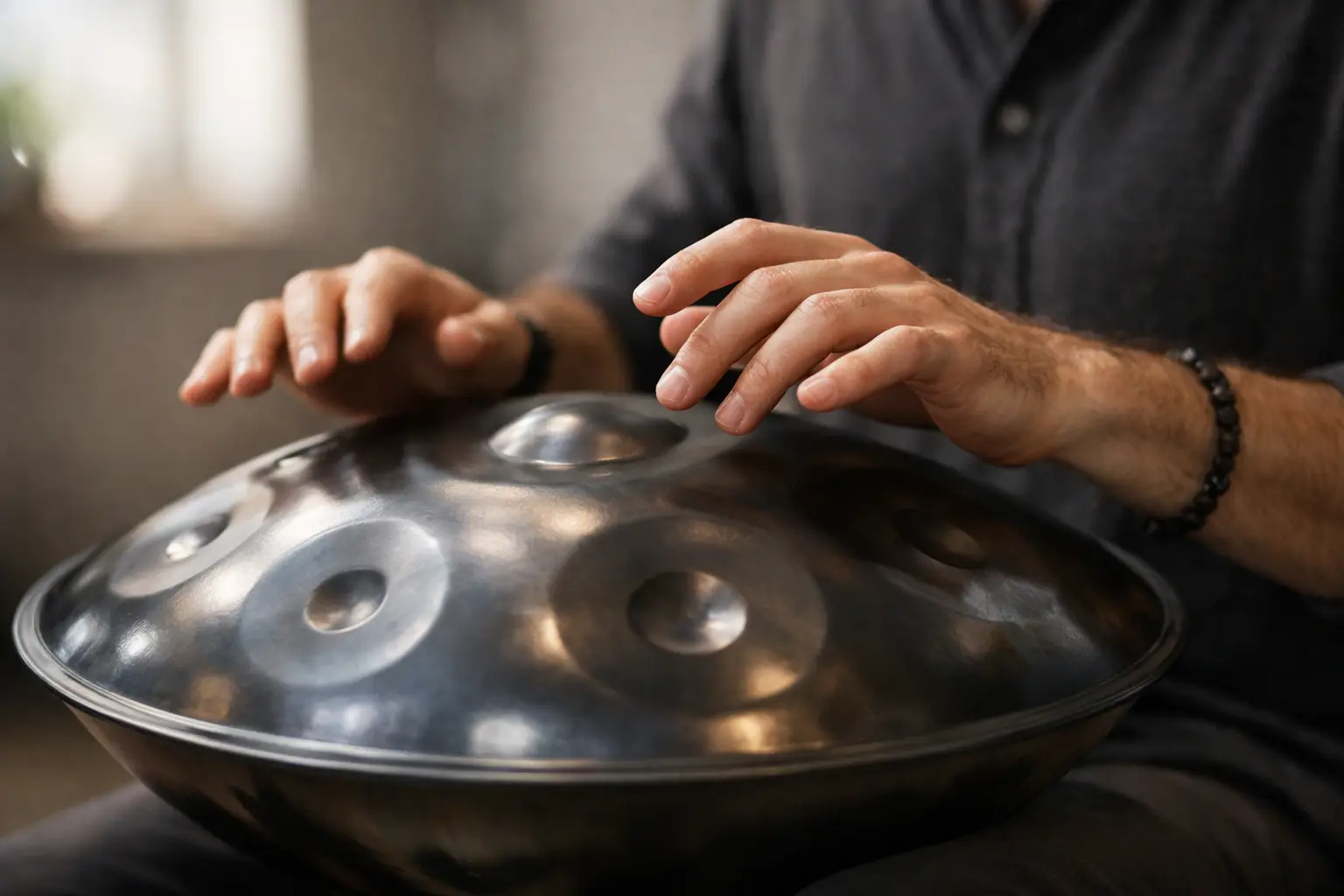
The handpan is designed to respond to a relaxed, quick contact. Think of the motion as a gentle bounce rather than a tap that stays on the steel. Your finger arrives, makes contact and leaves immediately, allowing the note to bloom into the air.
If your hand lingers on the playing surface, it can choke the vibration. If you strike with a stiff finger or too much force, the sound may become sharp, clunky or overly percussive. The sweet spot sits between these extremes: a soft, confident rebound that lets the instrument do the work.
Sit with the handpan stable on your lap, with both feet grounded. Keep your shoulders low and your wrists loose. Tension has a way of travelling from the neck and forearm into the fingertips, so take a breath before you begin. A settled body creates a settled sound.
Use the pads, not the tips
For most melodic notes, strike with the fleshy pad of the finger rather than the very tip or nail. The pad creates a warmer attack and is kinder to both your hands and the instrument. Your index and middle fingers will likely do much of the work at first, though every finger has a different colour to offer.
Try placing your hand above a tone field as though you are holding a small ball. Let one finger drop from the knuckle, then rebound. There is no need to lift the finger high. In fact, a small movement is often more accurate and musical than a dramatic one.
The exact contact point matters. Most notes respond best when struck around the outer area of the tone field, rather than directly in its centre. The centre can produce a more focused sound, while the edge often gives you a rounder, more open voice. Spend a few quiet minutes exploring both. Every handpan has its own response and character, so choosing a well-made instrument is an important part of developing good technique. Explore our range of handpans to find an instrument suited to your playing.
Finding a clear note without forcing it
A clear note begins before the strike. Hover your hand close to the surface and decide where the finger will land. Then make one clean contact. Avoid dragging your finger across the steel or following through as if you are pushing a button.
Listen for three things: the initial attack, the pitch and the sustain. A pleasing strike has a gentle beginning, a stable centre and enough space afterwards for the note to ring. If you hear a dull thud, reduce the pressure and shorten the contact. If the sound is thin, try moving slightly around the tone field or using more of the finger pad.
Volume does not come from force alone. A stronger sound usually comes from a slightly more decisive, well-timed rebound. It is a useful distinction for players who find themselves hitting harder when they cannot hear a note clearly. On a handpan, force can close the sound down. Ease and precision tend to open it up.
Let the ding breathe
The central note, known as the ding, often carries the emotional centre of the scale. It can provide a deep, grounding pulse beneath higher notes, especially in reflective improvisation or a sound-based wellbeing setting.
Strike the ding with a relaxed finger pad, usually near its upper curve rather than flat in the middle. Give it room after each note. Repeating it too quickly can crowd the resonance, while placing it with patience creates a spacious foundation for the rest of the instrument.
Try alternating one ding strike with a note from the tone circle. Leave a pause between phrases. This simple conversation between low and high sounds can become a complete piece of music, particularly when you allow the natural sustain to guide your next choice.
Build rhythm with alternating hands
Once individual notes sound clear, alternating hands is the next important step. It helps your playing flow, prevents one hand from becoming fatigued and makes faster patterns feel natural rather than frantic.
Start with a single note or two neighbouring notes. Play right, left, right, left at a slow, even pace. Keep each strike identical in intention, but do not aim for mechanical perfection. Handpan music often feels most alive when there is a subtle human rise and fall in the rhythm.
From there, create a simple pulse: one lower note for grounding, followed by two higher notes for movement. For example, play ding, right-hand note, left-hand note, then rest. Repeat it until it feels comfortable, then change one of the higher notes. You are not just practising coordination here – you are learning how melody can sit inside rhythm.
For meditation, yoga or quiet personal practice, slower rhythms with generous rests can be especially effective. In a live performance, you may choose tighter patterns and stronger accents. Neither approach is more correct. The setting, the scale and the feeling you want to create should shape your touch.
Add colour with softer and sharper strokes
Not every handpan sound needs to be a full, ringing note. A varied touch gives your playing texture, much like changes in breath give shape to a flute phrase.
A soft finger-pad strike creates the warm, rounded sound most players begin with. A slightly firmer flick from the finger can add a brighter accent. You may also use the side of the thumb or the heel of the hand for gentle, low percussive sounds on suitable areas of the shell. These techniques should support the melody, not overwhelm it.
Be cautious with hard knuckle strikes, heavy palm hits and fingernails. Some players use more percussive sounds creatively, but they require control and an understanding of the instrument’s response. For daily practice, a relaxed finger-led approach is the safest path to beautiful tone and long-term comfort.
Common touch problems and what they are telling you
When notes sound inconsistent, the cause is usually physical rather than musical. A buzzing or choked note often means the finger stayed in contact too long. A loud clack with little resonance can mean you are using the fingertip, nail or too much downward force. Notes that vary wildly in volume may point to a tense wrist or fingers lifting too far away from the surface.
Rather than repeating the same strike and hoping it improves, slow down and change one small thing. Relax the shoulder. Lower the hand. Use less force. Move the contact point a centimetre. Listen again. This kind of patient experimentation is one of the most rewarding parts of learning a handpan.
It also helps to practise in short sessions. Ten focused minutes spent listening closely can do more for your touch than an hour of playing on autopilot. If your hands feel sore, stop. Handpan playing should feel expressive and sustainable, not like you are working against the instrument.
A simple practice ritual for better touch
Begin with one minute of single strikes, moving slowly around the tone fields and waiting for each note to fade. Then spend a few minutes alternating right and left hands on two notes. Finish by playing a small phrase that feels good to you, even if it uses only three sounds.
Recording a minute of your practice on your mobile can be revealing. While you play, your attention is on movement. When you listen back, you can hear whether the notes are clear, whether your rhythm rushes and where the resonance has room to shine.
Handpan finger striking techniques become part of your musical voice over time. Let your hands stay curious, let the pauses matter, and allow each clear note to lead you towards the next one. When you’re ready to find an instrument of your own, explore our handpans for sale and discover the scale and sound that speaks to you.