

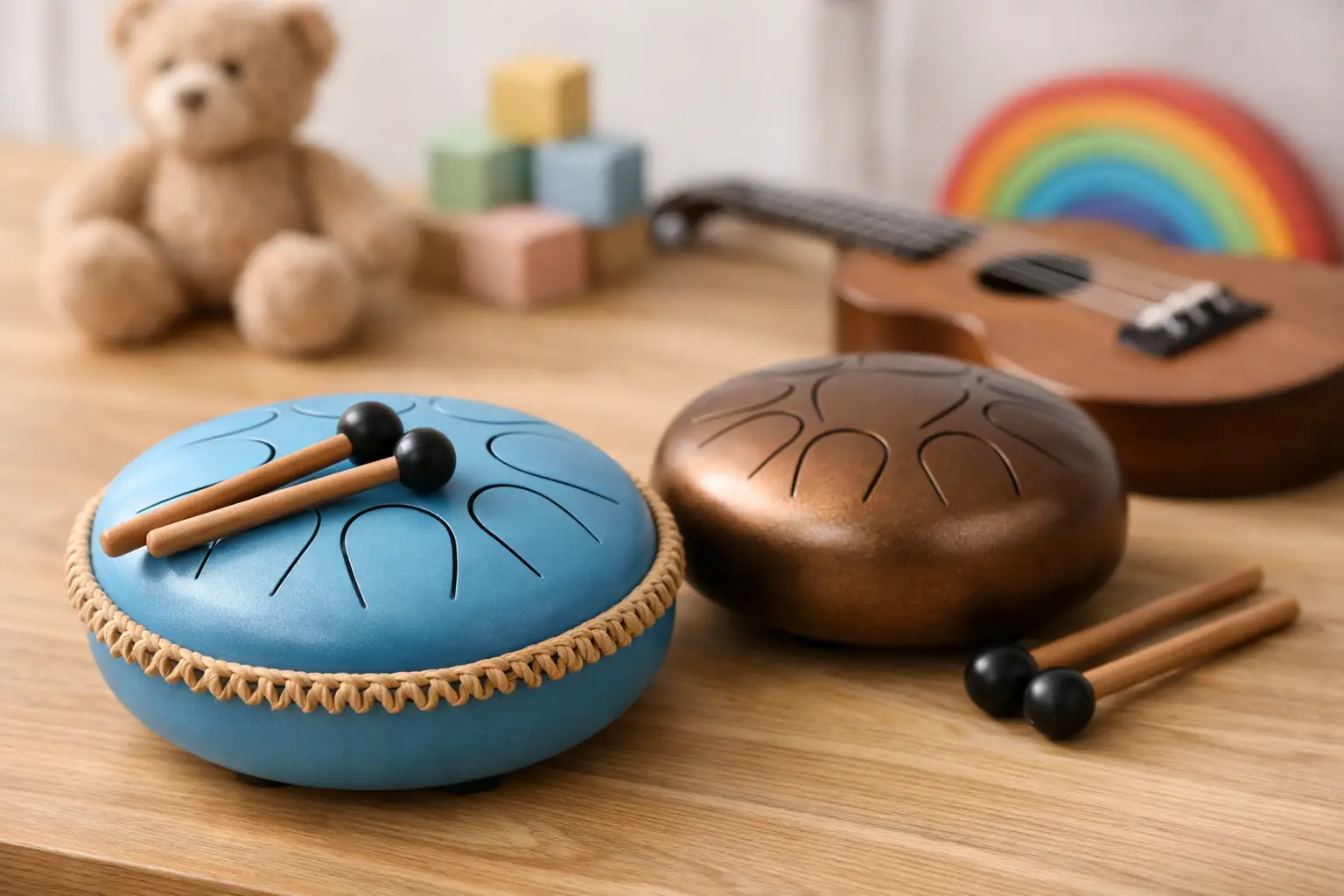
Best Tongue Drums for Kids: What to Choose
Best Tongue Drums for Kids: Top Picks & Tips
A child does not need to know a single chord to make a tongue drum sound beautiful. One gentle tap can fill a room with warm, bell-like notes, and because the notes are arranged to work together, even a first attempt can feel like a tiny piece of music. That is what makes the best tongue drums for kids so special: they invite curiosity without making children feel they have to get it right.
For families, educators and wellbeing practitioners, a tongue drum can become more than a novelty instrument. It is a tactile way to explore rhythm, listening and self-expression. The right choice depends on a child’s age, attention span, sensory preferences and the way the instrument will be used – quiet moments at home, music sessions in the classroom, or shared creative play.
What makes a tongue drum child-friendly?
The most suitable first tongue drum is rarely the one with the most notes, the loudest voice or the most elaborate finish. It is the one a child can comfortably hold, hear clearly and return to again and again.
A good children’s tongue drum has a reassuring feel. Its edges should be smoothly finished, its coating should be durable, and its sound should be clear rather than harsh. Steel tongue drums are especially popular because they offer a long, calming sustain and can handle everyday use better than many delicate instruments. Even so, they are musical instruments, not toys to be tossed about, so a padded carry bag and a simple place to store the drum make a real difference.
Size matters as much as sound. A compact drum is easier for small hands to reach across, whether it is played on the floor, on a lap or on a low table. Larger drums can offer deeper resonance and more notes, but may be awkward for younger children to manage independently. For many beginners, a small-to-medium steel tongue drum offers the loveliest balance of portability, tone and playability.
It is also worth considering volume. Tongue drums are generally gentler than many percussion instruments, but a bright, high-pitched small drum can still carry in a quiet home or classroom. The warm, rounded voice of a well-made instrument is often more pleasant for repeated play, particularly for children who are sensitive to sharp or unpredictable sounds.
The best tongue drums for kids are simple to play
A tongue drum works by striking the cut-out metal tongues on its surface. Each tongue produces a different note. Unlike a keyboard, where a child can easily land on notes that clash, many tongue drums are tuned to a carefully chosen scale. This creates a forgiving musical space where improvised patterns tend to sound connected.
For a first instrument, fewer notes can be a strength. Six, eight or 11 notes are enough to create melodies, rhythmic patterns and gentle soundscapes without presenting too many choices at once. A drum with more notes gives a growing musician more range, but young players can find a crowded layout confusing or simply stick to the same few tongues.
Choose a scale that welcomes experimentation
The scale is the emotional character of the drum. Major scales often sound bright, open and playful. Pentatonic scales use fewer notes and are particularly easy to improvise on, making them a wonderful fit for children. Minor scales can be soft, reflective and deeply soothing, and may appeal to families who want an instrument for winding down, yoga or quiet creative time.
There is no universal ‘best’ scale. A cheerful C major tongue drum can be a lovely choice for singing familiar tunes and learning basic musical ideas. A pentatonic scale may suit a child who prefers to make up their own patterns without instruction. A parent or practitioner seeking a more meditative sound may lean towards a gentle minor tuning.
When possible, listen to the character of a scale before choosing. The sound should make you want to pause and play. Children respond strongly to tone, even when they cannot yet explain why one instrument feels more inviting than another.
Fingers, mallets or both?
Mallets produce an immediate, full sound and can help a young child hear the note clearly with very little effort. They are ideal for early rhythm games, call-and-response activities and playing simple colour or number-coded songs. Look for soft rubber or felt-tipped mallets, rather than hard beaters that can create a sharper attack.
Finger playing is equally valuable. It feels more direct and teaches children how touch changes sound. Softer taps create a delicate voice, while a more confident strike brings out the drum’s resonance. A tongue drum that responds well to both fingers and mallets gives a child room to grow.
For younger children, always check the manufacturer’s recommended age and supervise use. Mallets and removable accessories can be unsuitable around children who still mouth objects. A compact instrument should also be placed on a stable surface, rather than balanced precariously on furniture or a high chair tray.
How to choose by age and stage
Age is useful as a guide, but temperament is often the better measure. Some preschoolers will happily tap two notes and invent a story around them. Some older children will want to learn songs straight away. Choose for the player in front of you, not only the number on the birthday card.
For preschool-aged children
Keep it uncomplicated. A smaller drum with a limited number of clearly spaced tongues is easier to explore. At this stage, the joy is in cause and effect: tap, listen, repeat. Let children discover the difference between fast and slow, loud and soft, one note and many.
Short shared sessions work beautifully. You might play a steady beat while they answer with a sound of their own, or take turns choosing a note for a bedtime sound ritual. There is no need to turn every moment into a lesson.
For primary school children
A drum with eight to 11 notes can support more deliberate musical play. Simple song sheets using numbers, letters or coloured stickers can help children build confidence, especially if they enjoy structure. They can also begin creating repeating patterns – a valuable foundation for rhythm and composition.
This is a good age to introduce listening as part of playing. Ask them which note sounds like rain, which sounds like a giant’s footsteps, or which pattern feels peaceful. These prompts develop musical language without making music feel academic.
For older children and young teens
Older beginners may appreciate a larger range, a more nuanced tuning or a deeper-bodied drum with longer sustain. They are more likely to explore composition, play alongside another instrument, or use the drum as a calming break from screens and busy routines.
A quality tongue drum can hold its place as their skills develop. It may start as a personal instrument for quiet improvisation, then become part of a school performance, a songwriting session or a family jam.
Steel, wood and build quality
Most tongue drums marketed for children are steel, and for good reason. Steel offers a resonant, singing tone that lingers after each strike. A properly tuned steel drum also tends to keep its musical identity through regular use, provided it is cared for well.
Wooden tongue drums have a different appeal. They are often lighter and can sound warm and percussive, with a shorter sustain. They may suit a child who likes a more immediate, rhythmic sound or a family looking for an instrument with a natural, organic appearance. The trade-off is that wooden models can vary more in projection and tonal depth.
Whichever material you choose, inspect the practical details. A reliable drum should have smooth edges, stable tuning, a finish that does not feel rough or flaky, and notes that speak evenly across the instrument. Very cheap drums can be tempting, but uneven tuning can make a child feel that their playing is the problem when the instrument itself is limiting the experience.
Creating a musical relationship, not a practice chore
A tongue drum is at its best when it is easy to reach for. Keep it somewhere visible and safe: perhaps in the lounge room, a reading nook, a classroom music corner or a calm space used for breathing exercises. If it lives zipped away in a cupboard, it is less likely to become part of everyday creative life.
Try making a small ritual around it. A child might play three slow notes before bed, create a ‘weather song’ after school, or use the drum to mark the start of a family meditation. In a group setting, each person can add one note to a shared soundscape. These moments teach patience, turn-taking and attentive listening without announcing themselves as lessons.
At Handpans Australia, we see melodic percussion as an invitation to connect – with rhythm, with stillness and with the small musical ideas that arrive when there is room to listen. Give a child an instrument that sounds kind from the first touch, and they may carry that sense of possibility far beyond the final ringing note.