

Can Handpans Play Chords? What Your Hands Can Create
Can Handpans Play Chords? Here's What to Know
A handpan can fill a quiet room with melody, pulse and a glowing wash of harmony from just a few gentle strikes. But can handpans play chords in the same way as a piano or guitar? Not quite. They can create chord-like harmony beautifully, yet the instrument asks you to think with touch, timing and resonance rather than fixed shapes.
For many players, that is part of the magic. A handpan does not demand that you memorise dozens of chord positions before music begins to flow. Its notes are carefully chosen to belong together, so even simple combinations can feel settled, spacious and emotionally rich.
Can handpans play chords at the same time?
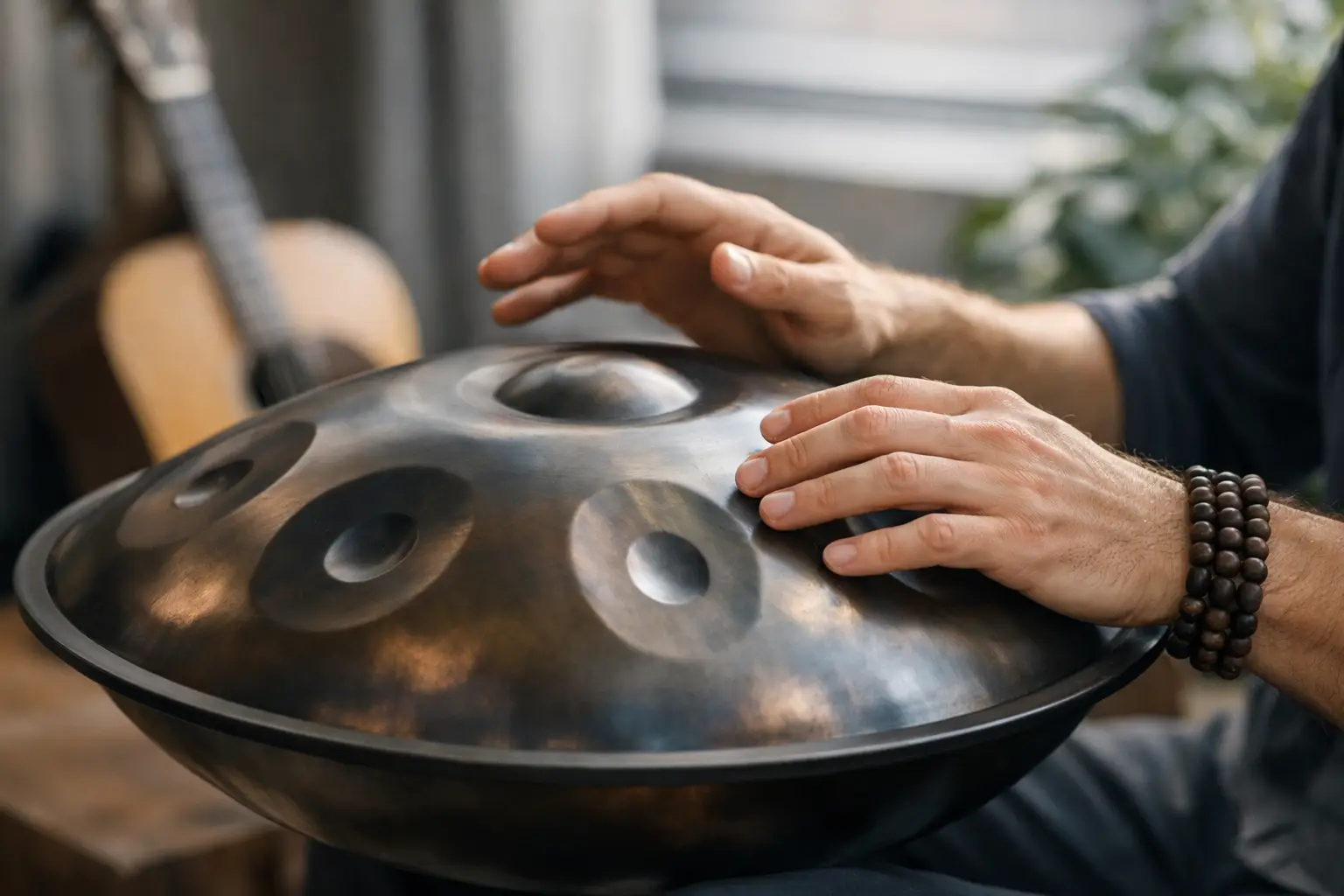
Yes, handpans can play two or more notes simultaneously. Striking separate tone fields with both hands, or allowing one note to ring while you add another, creates harmonic intervals and chord colours. A skilled player can suggest a full chord, accompany a singer or build a rich harmonic bed beneath a melody.
There is a useful distinction, though. On a piano, you can press three, four or five notes at precisely the same instant and sustain them with a pedal. On a handpan, each note is a resonant area of steel, played with the hands. You may strike two notes together easily, but playing a dense five-note chord at one exact moment is less practical and can make the sound crowded.
Handpan harmony is usually more flowing than block-like. You might play a low root note, let it bloom, then place a third and fifth over it in quick succession. The ear hears the relationship as a chord even though the notes arrive a fraction apart. This approach feels natural on the instrument and preserves its warm, breathing resonance.
Why a handpan is built for harmony
Most handpans are tuned to a scale rather than to a complete chromatic set of notes. A common handpan may have eight to ten notes, with a central ding note and a circle of surrounding tone fields. Those notes are selected to work together within a particular key or mood.
That design gives beginners a generous musical safety net. If your handpan is tuned to D minor, for example, the available notes will generally support melodies and harmonies that belong to that tonal landscape. It becomes much harder to land on a note that sounds sharply out of place.
The trade-off is choice. A guitar player can change from a major chord to a minor chord, add a seventh, then move to an unrelated key. A single handpan has a more focused tonal vocabulary. Rather than offering every possible chord, it offers a particular sound world with depth inside it.
This is why the scale matters so much when choosing an instrument. A minor scale can feel introspective, earthy or ceremonial. Major and brighter scales may feel open, uplifting and sunlit. Some scales have an exotic or meditative quality that suits slow improvisation, yoga, sound sessions or ambient performance. None is objectively better. The right choice is the one that makes you want to sit down and play.
Intervals are the heart of handpan chords
On a handpan, two-note combinations are often the clearest and most effective form of harmony. Musicians call these intervals. A root note with a fifth can sound grounded and open. A root with a third tells the listener whether the harmony feels major or minor. A third with a fifth can add colour while leaving room for another instrument or voice.
Because handpan notes sustain, even a simple interval can feel surprisingly complete. Play a low note with one hand and a higher complementary note with the other, then pause. Listen to the notes meet in the air. That lingering relationship is often more moving than trying to fit in more notes.
Octaves are another beautiful option. If your handpan includes the same note in different registers, striking or rolling between them creates a full, centred sound. Octaves work especially well in slower playing, where the resonance has room to settle.
How to create chord progressions on a handpan
A chord progression on handpan is usually created over time. Start by establishing a home note, often the ding or another low tone field. Then build a short melodic phrase using notes that imply the harmony above it. Return to the home note and change the upper notes to suggest a new emotional direction.
For instance, you may alternate a low root with a fifth, then shift the upper note to a third. The bass remains stable while the colour changes. You can also use an arpeggio approach: play the notes of a chord one after another, from low to high or high to low. With gentle, even timing, the sustain blends them into one harmonic shape.
Rhythm has a major role here. A repeating pulse in the lower notes can make the handpan feel like both percussion and accompaniment, while the other hand paints melody above it. This is one reason the instrument works so well for solo expression. You are not merely tapping notes. You are shaping rhythm, harmony and space at once.
Try leaving more silence than you think you need. Handpan notes continue singing after your fingers leave the steel. If each new note arrives too quickly, the overtones can pile up and blur the harmony. A clear chord-like sound often comes from confident restraint.
A simple practice for beginners
Choose three notes that sound settled together, ideally a lower note and two notes above it. Play the lower note first, then add the two higher notes one at a time. Repeat the pattern slowly and listen for the moment when the sound feels balanced.
Next, try striking the two upper notes together after the bass note. Keep your touch light. The goal is not volume but clarity. If the notes sound harsh or choked, soften the strike and give the instrument a little more time between phrases.
Once that feels comfortable, create a second three-note shape using nearby notes from the same scale. Alternate between the two shapes. You have the beginning of a progression, without needing to name every chord or understand formal theory.
Technique matters more than force
Handpans respond best to relaxed, deliberate contact. A sharp tap with the fingers can bring out a clear pitch, while the heel of the hand and softer touches can create quieter rhythmic textures. To play notes together, many players use one hand per tone field. The movement should feel loose and economical, not like drumming hard on a tabletop.
Muting is equally valuable. Lightly resting a hand on a ringing note shortens its sustain, helping the next harmony sound clean. This is particularly useful when playing faster patterns or when accompanying other musicians. You are choosing not only which notes to play, but also when their resonance should end.
Every handpan has its own voice. Larger instruments and lower scales often produce a deep, rolling foundation, while higher scales can be sparkling and agile. The layout, number of notes and quality of tuning all influence how easily you can find satisfying harmonic combinations. Spend time listening to an instrument rather than judging it by note count alone.
Playing chords with other instruments
A handpan becomes even more versatile when it is part of an ensemble. A guitarist or keyboard player can provide full chord changes while the handpan adds melody, pulse and shimmering accents. A Native American flute can float above the handpan’s steady tonal centre, creating a spacious conversation rather than competing for the same role.
In a wellness or sound-based setting, the handpan does not need to state complex harmony to be effective. A repeated root, open fifth and gentle melodic motif can create a calm, held atmosphere. In a live performance, more rhythmic patterns and carefully timed intervals can bring energy without losing that sense of warmth.
If you want full chord voicings as a central part of your music, pairing your handpan with a harmonic instrument is often the best path. If you want an intuitive instrument that lets harmony emerge through movement and listening, the handpan stands wonderfully on its own.
Let the resonance lead
The most satisfying handpan chords are rarely the busiest ones. Begin with two notes that make you pause, then let a third note arrive only when it has something to say. Over time, your hands will learn the pathways across the steel, and harmony will feel less like a theory exercise and more like a conversation with resonance.
That is a rewarding place to begin: not trying to make a handpan behave like a piano, but allowing it to reveal the kind of harmony it was made to hold.