Can Handpans Be Retuned? What Players Should Know
A handpan can feel like a small world beneath your hands: one gentle strike brings warmth, sustain and a note that seems to hang in the air. So, can handpans be retuned when that familiar voice starts to sound strained, flat or unsettled? Often, yes. But retuning is specialist work, and the right answer depends on the instrument’s condition, construction and history.
A handpan is not tuned by turning a peg or replacing a string. Its notes are carefully shaped areas of steel, each carrying several related tones. Restoring one note without disturbing the balance around it takes a trained ear, the right tools and considerable patience. For players, the reassuring news is that many tuning issues can be addressed – provided the instrument is assessed early and placed in experienced hands.
Can handpans be retuned after they go out of tune?
Yes, many handpans can be retuned. A skilled handpan maker or specialist tuner may be able to bring notes back into their intended pitch, clarity and sustain after an accident, hard playing, travel damage or gradual change over time.
That said, retuning is never quite the same as a quick service for a guitar. Each tone field is part of a finely balanced whole. A tuner may need to work on the fundamental note, its octave and its fifth, while listening closely to how that note speaks alongside every other note on the shell. The aim is not only for a tuning app to show the right pitch. It is for the handpan to feel musical again.
Whether a handpan can be retuned successfully depends on a few things: how far the note has moved, whether the steel has been dented or stretched, the quality of the original build, and how many times the instrument has already been tuned. A minor issue caught early is generally more straightforward than extensive damage left untreated.
Why a handpan’s tuning can change
Handpans are made from steel, but they are far from rigid objects. Their sound comes from carefully tensioned and shaped metal. A sharp knock to a tone field, a fall, pressure from heavy gear in transit, or rough handling can alter that delicate shape.
Sometimes the change is obvious. A note may develop an unpleasant metallic ring, sound noticeably lower or higher than its neighbours, or lose its clear singing quality. Other times, it is subtler. You may simply notice that your favourite pattern no longer settles the way it once did, or that one note needs a firmer strike to respond.
Heat is another risk. Leaving a handpan in a hot car, near a heater or in direct sun for a long period can place stress on the steel. Extreme temperature shifts are not ideal either. Normal seasonal changes and everyday playing should not cause sudden tuning problems in a well-made instrument, but care around heat, impact and storage makes a real difference over years of playing.
A handpan can also sound out of tune when it is not actually the tuning at fault. Buzzing hardware nearby, a case strap touching the shell, an unfamiliar playing technique, or simply fatigue in the listener’s ear can create doubt. Recording the instrument in a quiet room and comparing the notes carefully can help you describe the issue before seeking advice.
What professional retuning involves
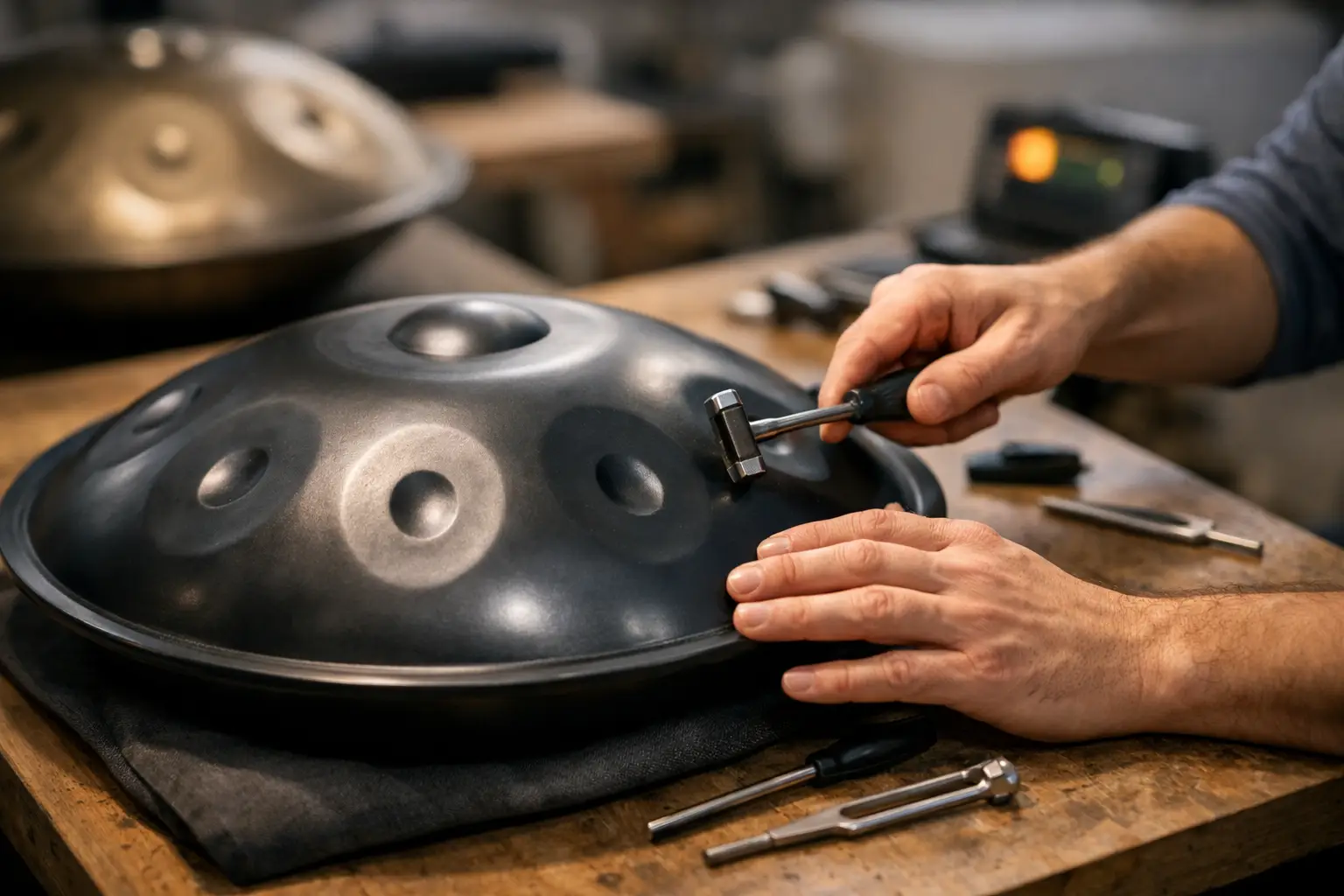
Professional retuning is a precise form of metalwork as much as a musical service. The specialist first listens to the instrument as a complete voice. They will assess the pitch and stability of each note, check for dents or structural concerns, and consider whether a previous repair has affected the shell.
The correction itself may involve extremely controlled work around and within the tone fields. Small adjustments can have a large effect, which is why a handpan should never be treated like a dented saucepan that can be tapped back into shape. The tuner continually checks pitch, resonance, separation between notes and the overall balance of the instrument.
In some cases, the instrument may need more than a simple pitch correction. If there is a dent, crack, corrosion or a deeply collapsed tone field, repair work may be required before the note can be properly stabilised. This can take time, and there may be limits to how closely the original character can be restored.
A good specialist will be honest about those limits. Retuning can be wonderfully successful, but it is not a promise that every damaged handpan will return to exactly the sound it had on day one. The older the instrument, the more severe the damage, and the more repeated tuning it has received, the more careful the assessment needs to be.
Why DIY retuning is risky
It is tempting to search for a tutorial, pick up a hammer and try to correct one troublesome note yourself. For handpans, this is rarely a kind gamble. A strike in the wrong spot can move several partials at once, create an audible wobble, reduce sustain or push a small issue into a costly repair.
Even experienced percussionists and confident musicians are wise to leave tuning to handpan specialists unless they have trained specifically in the craft. Playing a handpan is intuitive. Building and retuning one is a separate discipline, developed through close listening, technical knowledge and many hours of practice.
If you suspect a problem, avoid repeatedly striking the affected note hard in an attempt to make it behave. Store the handpan safely, make a short recording of the sound if useful, and seek an informed assessment. Early care can preserve more options.
How to protect your handpan’s tuning
Thoughtful handling is the simplest way to keep your handpan resonant and ready to play. Use a well-padded case whenever you travel, and do not stack bags, stands or other equipment on top of it. In the car, secure the case so it cannot slide or take a hit when you brake.
At home, keep the instrument somewhere dry, temperate and away from direct sunlight. Do not leave it on the floor where it might be bumped by feet, pets or furniture. If you play outdoors, enjoy the open air but bring the handpan inside after your session rather than leaving it exposed to dew, rain or a scorching afternoon.
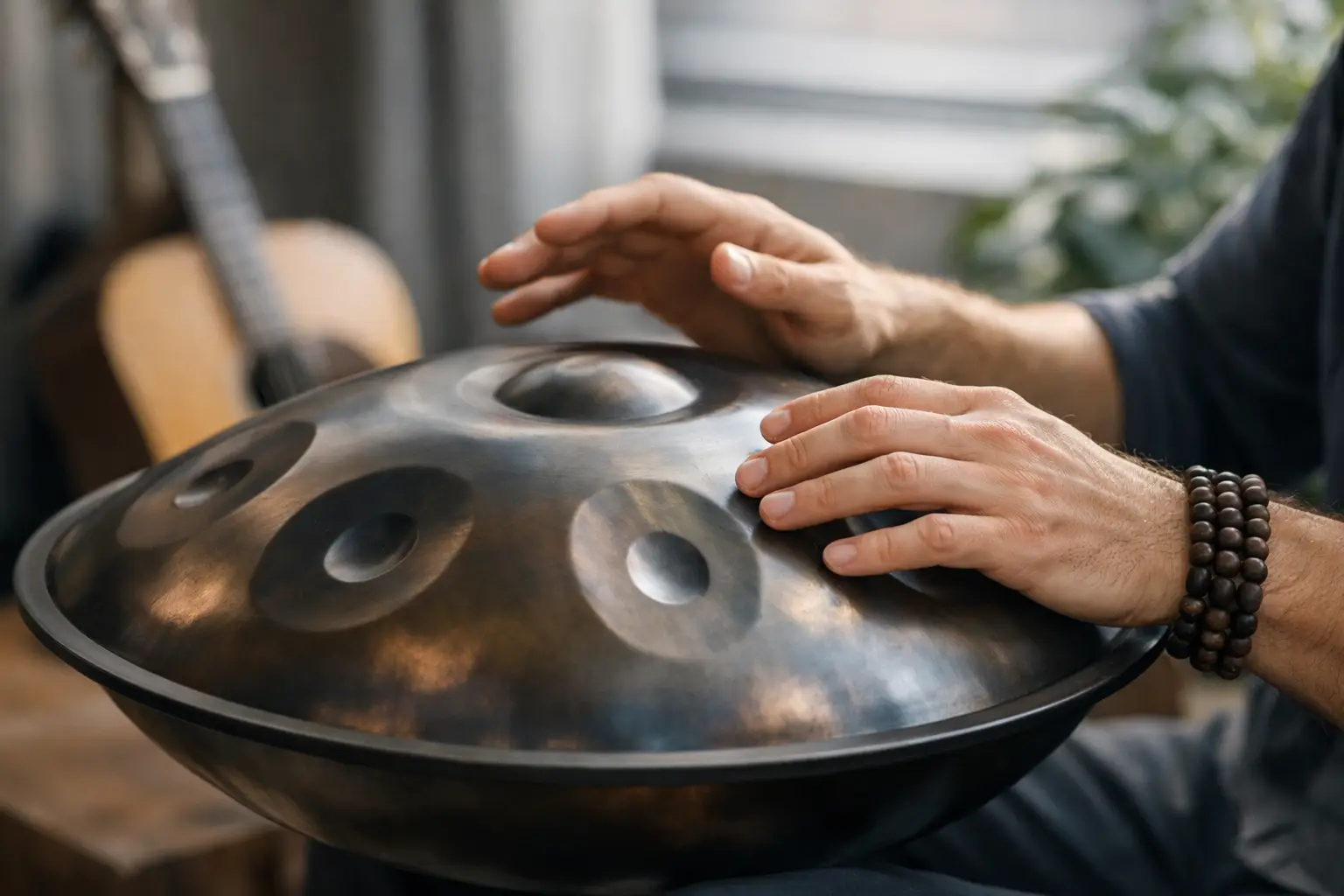
Your hands matter too. Play with relaxed fingers and palms rather than force. A handpan responds best to touch, not brute force. Stronger playing does not necessarily create more expression; it can make the sound harsh and place unnecessary stress on the tone fields.
Regular basic care supports the steel as well. Wipe the instrument with a clean, soft cloth after playing to remove moisture and fingerprints. The ideal protection routine differs according to the type of steel and finish, so follow the maker’s care guidance rather than applying random oils or cleaners. Products that suit one handpan may be unsuitable for another.
When should you arrange an assessment?
Arrange an assessment if a note suddenly changes after a knock, if a new buzz or rattle persists, or if the instrument has been dropped. It is also worth asking for help when a note has lost much of its sustain or sounds distinctly different from recordings you made earlier.
There is no need to panic over every tiny variation. Handpans have character, and our perception of tone changes with room acoustics, temperature and mood. Yet if your instinct says the instrument has changed, listen to it. A handpan is built for connection, and regular players often notice its subtle shifts before anyone else does.
For a first instrument or a treasured companion, careful sourcing and ongoing support matter. Handpans Australia encourages players to treat these instruments as musical relationships: play them often, transport them gently, and seek skilled help when their voice needs attention. With sensible care, a quality handpan can remain a source of calm, rhythm and creative discovery for many years.
A changed note does not have to be the end of the story. Give the instrument the same patience it has offered you, and the right specialist may help its clear, resonant voice find its way home.