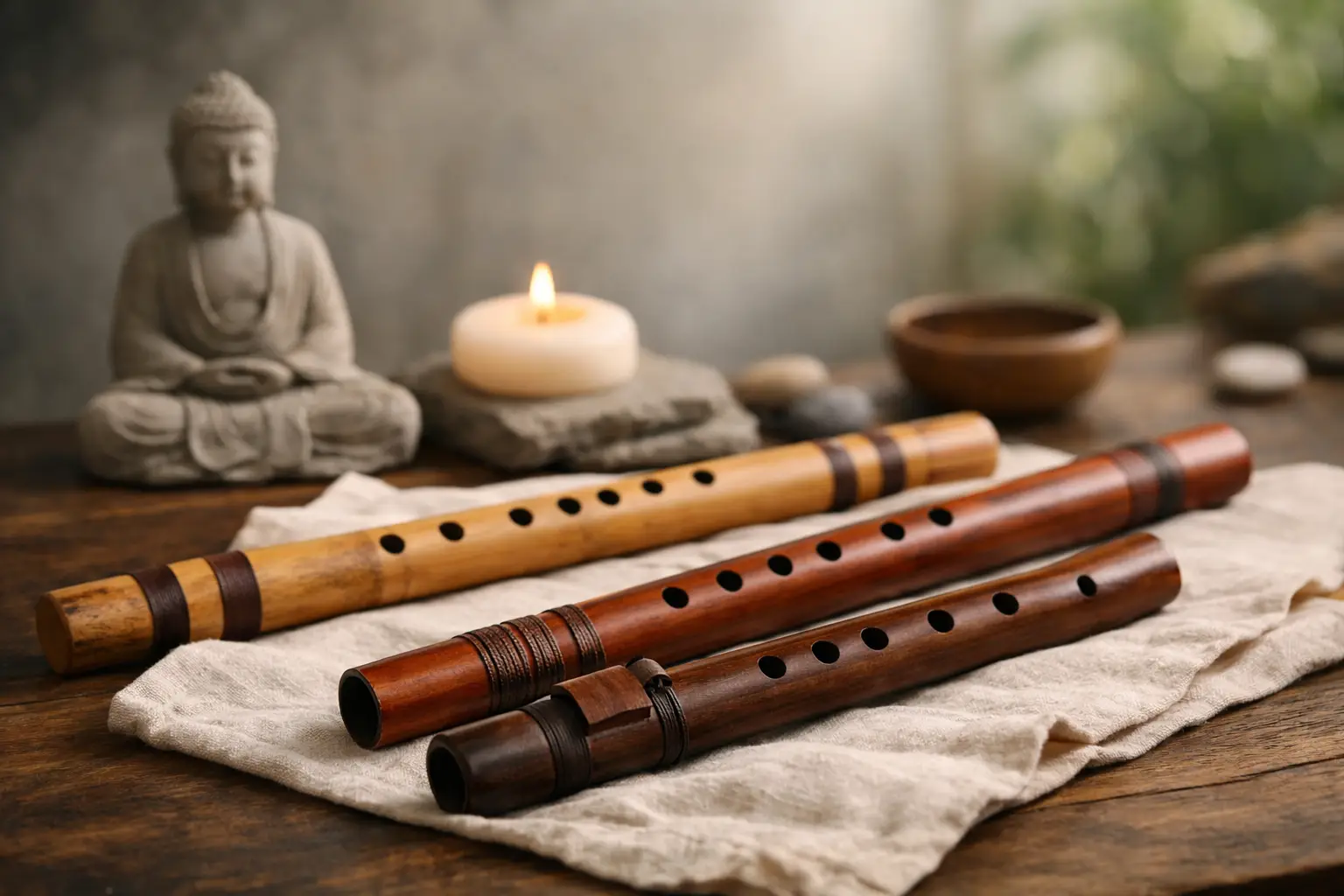
Best Wooden Flutes for Meditation: Choose Yours
Best Wooden Flutes for Meditation: Choose Yours
A wooden flute can change the character of a quiet room before you have played more than three notes. Its breathy edge, soft timber resonance and unhurried phrasing invite you to listen as much as perform. For people searching for the best wooden flutes for meditation, the most meaningful choice is rarely the flashiest or most expensive instrument. It is the flute whose voice makes you want to return, breathe steadily and let a simple melody unfold.
Meditation does not require musical perfection. In fact, a flute that is easy to hold, forgiving to play and pleasing in a few notes can be far more useful than an instrument that asks for years of technical study. The aim is not to create a concert every morning. It is to make space for calm, attention and personal expression.
What makes a wooden flute suited to meditation?
Wood brings a natural warmth that many players find grounding. Compared with the clean, bright projection of a metal concert flute, a well-made wooden flute often carries more texture in the breath and a rounder, earthier centre to each note. That character can sit beautifully beside a handpan, tongue drum, gentle chimes or the ambient sounds of a garden.
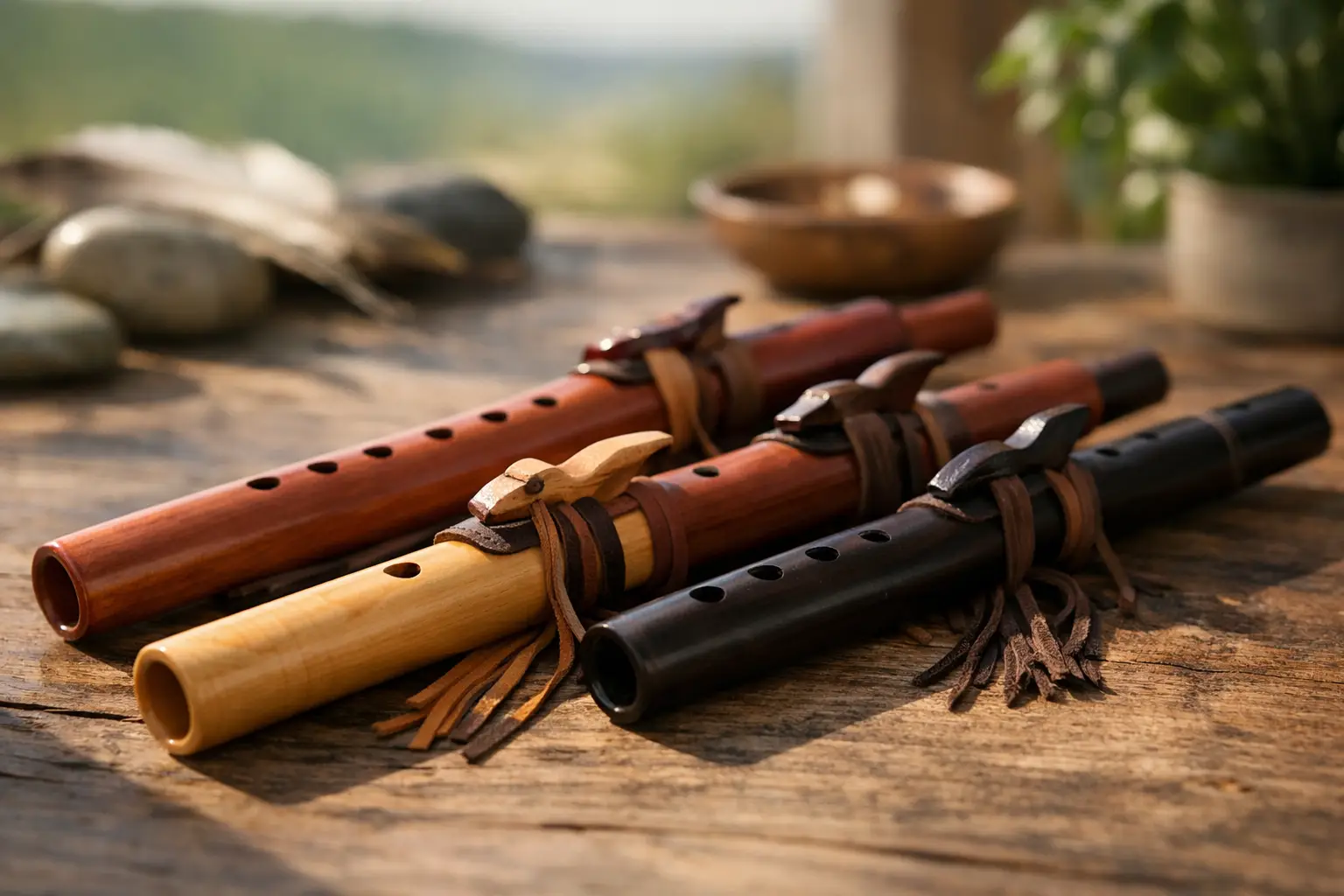
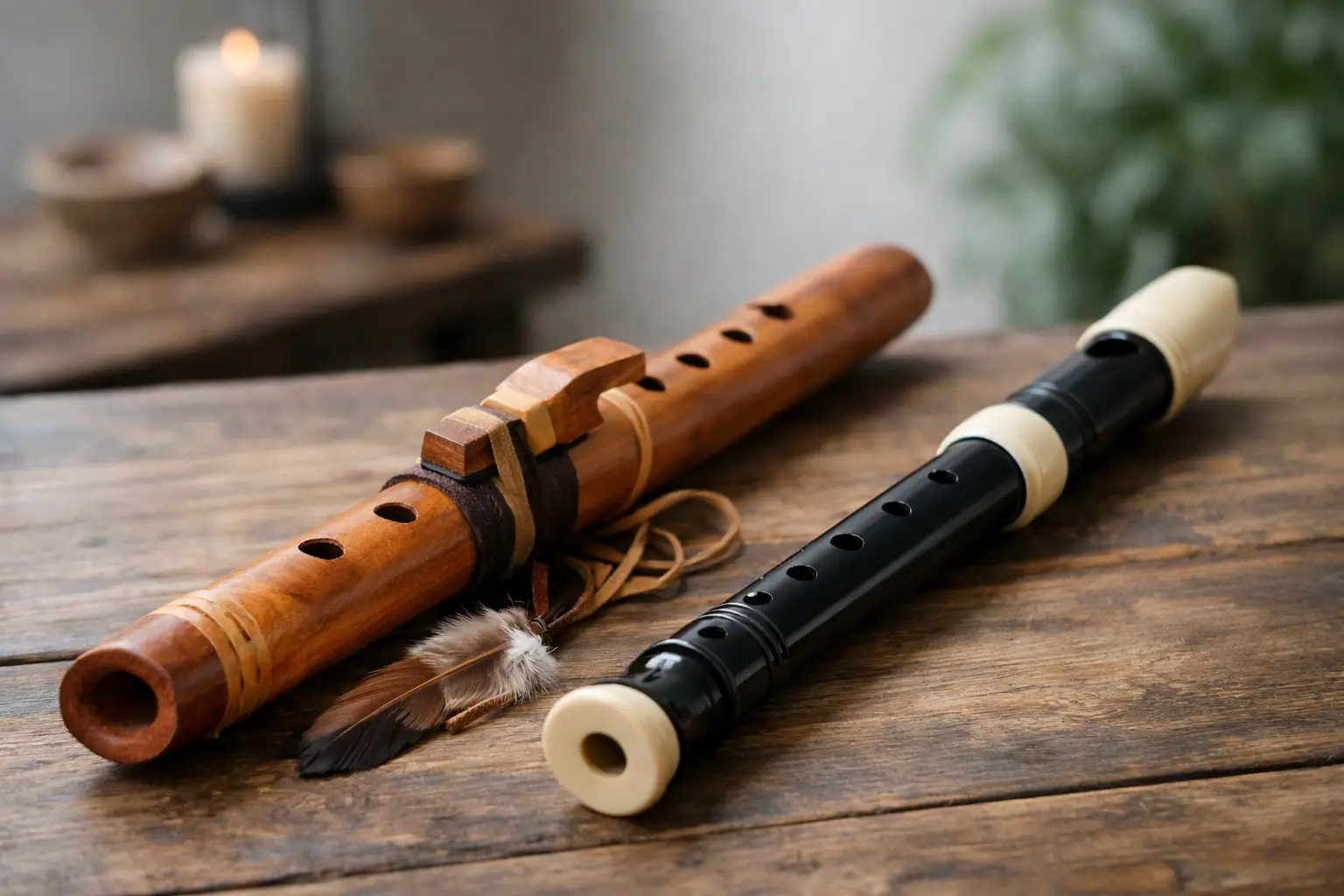
The best meditation flute is also one that leaves room between notes. Instruments with a simple fingering layout and an intuitive scale help you focus on phrasing rather than analysing every musical decision. This is why Native American flutes are a popular choice for reflective playing. Their open, vocal quality and accessible layout can help a beginner create musical phrases surprisingly quickly.
That said, there is no single sound that is inherently meditative. A low, dark flute may feel deeply settling to one person, while another prefers the clear, floating voice of a smaller instrument. Your own response matters more than a label promising relaxation.
Best wooden flutes for meditation: start with the voice
When comparing wooden flutes, begin with pitch range rather than timber species or decoration. The key influences both the physical size of the flute and the emotional weight of its sound.
Low keys for spacious, grounding practice
Lower-pitched flutes have a wider bore and longer body, producing a slow, resonant voice with more depth. Keys such as low A, G and F are often loved for solo meditation, slow movement classes and sound-based wellbeing sessions. Their notes can feel like they have somewhere to land.
There is a practical trade-off. A low flute requires a wider hand stretch and more air. If you have smaller hands, stiffness in your fingers or are completely new to wind instruments, a very low key can feel less relaxing than expected. It may be worth choosing a slightly higher flute that you can play comfortably for ten minutes, then grow into a lower voice later.
Mid-range keys for balance and versatility
A flute in a middle register, such as A, G or F depending on the instrument’s design and tuning, often gives players the best balance of warmth, portability and comfort. It can sound intimate in a quiet room without requiring the reach of a large flute.
For a first wooden meditation flute, a comfortable mid-range key is often a thoughtful place to begin. It can accompany a handpan or tongue drum without being swallowed by the deeper tones, and it is usually manageable for regular practice.
Higher keys for light and lift
Higher flutes are more compact, responsive and bright. Their voice can bring a sense of clarity to breathwork, morning practice or a more uplifting yoga playlist. They also suit travellers and players who want an instrument that slips easily into a bag.
The trade-off is that high notes can feel more piercing in a small, reflective space, particularly if played loudly. A gentle breath and patient phrasing make all the difference. If you are drawn to a higher flute, listen for sweetness rather than sheer volume.
Choose a scale that supports improvisation
Meditation playing is usually less about reading sheet music and more about responding to the moment. A flute in a forgiving scale lets you move through notes with confidence, pause naturally and repeat a phrase until it feels complete.
Pentatonic tunings are especially welcoming because many note combinations work well together. This makes them ideal for players who want to improvise without a heavy theory background. You can begin with one long note, answer it with another, and gradually form a small musical conversation.
Minor tunings tend to offer a more introspective, earthy mood. Major tunings can feel open and sunlit. Neither is better. If your meditation practice is about settling the nervous system after a busy day, you may lean towards a lower, minor voice. If you are using music to begin the day with gentle energy, a lighter major tuning may suit you beautifully.
If you plan to play with others, tuning deserves more attention. An instrument tuned to a common reference pitch will be easier to pair with handpans, tongue drums and other melodic instruments. For private, solo practice, the emotional response you have to the flute is the stronger guide.
Timber matters, but playability matters more
Cedar, walnut, maple and bamboo all bring their own visual and tonal personalities. Dense hardwoods can offer clarity and projection, while softer or more porous timbers may feel warmer and more textured. Grain, finish and construction also affect the result, so it is not reliable to assume every flute made from the same wood will sound identical.
Choose a timber you enjoy seeing and holding. Meditation often becomes a ritual through small sensory details: the grain beneath your fingers, the scent of oiled wood, the quiet act of taking the flute from its case. But do not let a beautiful timber distract from comfort, tuning and craftsmanship.
A well-built wooden flute should have cleanly finished finger holes, a secure block or mouthpiece arrangement where relevant, and a voice that speaks with a relaxed breath. Notes should not require force. If you have to push hard just to make a steady tone, practice can become frustrating rather than restorative.
Comfort is part of the sound
The finest tone in the world is of little use if your hands ache after a few minutes. Before settling on an instrument, consider hole spacing, body length, weight and the shape of the mouthpiece. Flutes with offset finger holes can make lower keys more accessible, while a compact instrument may be a kinder choice for smaller hands.
Your breath capacity matters too. A meditation flute should encourage slow, easy exhalation. Start with soft air rather than trying to fill every note with volume. The flute will reveal its natural resonance when you give it enough breath to speak, then leave it room to fade.
This approach is useful for experienced musicians as well. Technical ability can tempt us to play too many notes. For meditation, the silence after a phrase is part of the music. Let it remain.
A simple way to use your flute in practice
Settle somewhere you will not be interrupted, with your flute within easy reach. Take a few quiet breaths before playing. Begin on the lowest comfortable note and hold it only as long as the breath feels natural. Listen to the moment it begins, the way it changes, and the way it disappears.
From there, play two or three nearby notes. Repeat them without trying to improve them. If a phrase feels peaceful, rest with it. If you make an unexpected sound, treat it as information rather than a mistake. Wooden flutes reward this kind of attentive playing because their voice changes subtly with breath, temperature and touch.
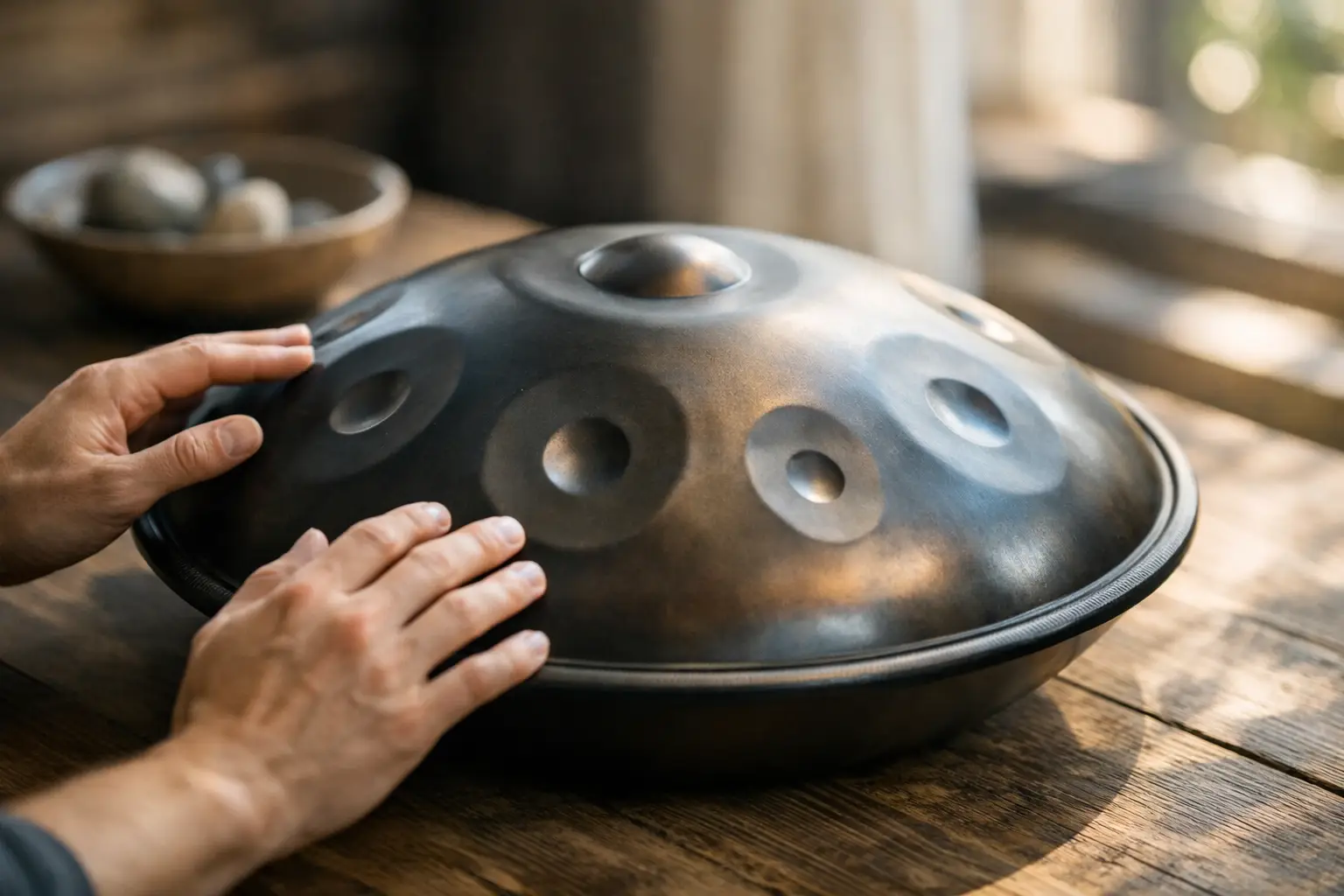
You can pair the flute with a handpan or tongue drum, but keep the arrangement simple. Let the drum establish a gentle pulse, then allow the flute to enter as a response rather than a constant layer. Handpans Australia often sees this combination appeal to players because it creates melody and rhythm without crowding the space.
Care for the ritual, not just the instrument
Wood responds to moisture and temperature, so a few quiet care habits protect both its condition and its voice. Let the flute warm gradually when moving from a cold car or air-conditioned room. Swab out moisture after playing, and store it away from direct sun, heaters and extreme humidity.
Follow the maker’s instructions for oiling, as different finishes and woods need different treatment. Avoid leaving the flute in the boot of a car, even for a short time on a hot Australian day. Cracks and warped wood are far harder to live with than a simple routine of careful storage.
The right flute will not force meditation to happen. It will simply offer an inviting place to begin: one breath, one note, then enough silence to hear what is already there.