

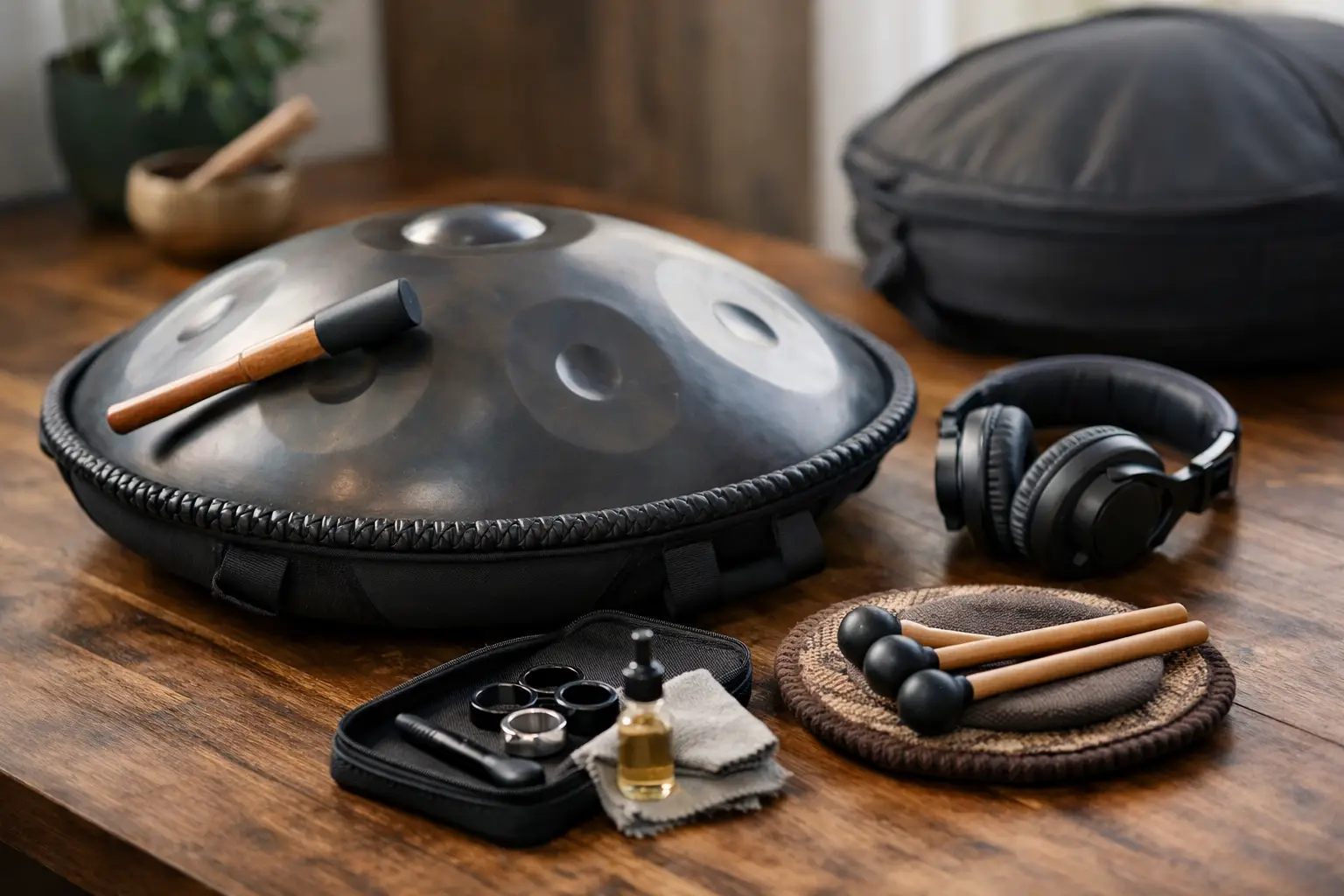
Handpan Accessories That Truly Earn Their Place
Handpan Accessories for Every Player
A handpan can turn a quiet room into a place of rhythm, reflection and unexpected melody. It asks very little of the player, yet its steel shell carries a great deal of care. The right handpan accessories help protect that voice, make practice more comfortable and give you confidence to take your instrument beyond the lounge room.
Not every accessory is essential. In fact, an overcrowded kit can distract from the simple pleasure of sitting down and playing. The most useful choices are the ones that suit how you live with your handpan: whether it stays at home for a daily creative reset, travels to yoga and sound sessions, or joins you on stage.
The handpan accessories worth choosing first
If you are building your kit from scratch, begin with protection. A handpan is made to be played with the hands, but its carefully shaped tone fields can be affected by hard impacts, careless storage and unsuitable cleaning products. A quality bag or case is therefore not an optional extra for anyone planning to transport their instrument.
A padded soft case is often the right fit for local trips, lessons and relaxed gatherings. It is lighter to carry and easier to manage when walking from the car to a studio or along a footpath to an outdoor session. Look for supportive shoulder straps, substantial padding, a secure zip and enough structure to keep the handpan from shifting around inside.
For frequent travel, touring or any situation where the instrument may be handled by others, a hard case offers more confidence. The trade-off is weight and bulk. A hard case can be a sensible investment for performers, but it may feel excessive if your handpan mostly moves between a bedroom and a sheltered backyard. Choose protection that matches your real routine, rather than buying for a trip you may never take.
A simple protective cover or cloth can also be useful at home. It keeps dust away while the handpan rests between sessions and creates a gentle barrier from curious fingers, pets or the occasional misplaced cup of tea. It is not a substitute for a case when travelling, but it encourages better everyday habits.
A stable place to play changes everything
Many players begin with their handpan on their lap. This is a beautiful, direct way to meet the instrument. You feel its vibration through your body, can subtly change the angle, and remain close to the natural flow of improvised playing.
Over time, though, a stand can become one of the most meaningful additions to your practice. It raises the handpan to a comfortable height, gives both hands freer movement and can reduce tension in your shoulders, back and wrists. For longer sessions, that comfort matters. When your body is settled, it is easier to listen to the decay of each note and let a rhythm unfold without rushing.
Choosing a handpan stand
A good stand should hold the instrument securely without placing pressure on the tone fields. Adjustable height is helpful if more than one person will play it, or if you alternate between sitting and standing. Wide, stable feet are particularly valuable for workshops, wellness spaces and performances where people may be moving around nearby.
Material and portability matter too. A compact folding stand suits musicians who travel to classes or small events. A more substantial stand may be preferable for a dedicated practice corner or studio. Before buying, consider the diameter and shape of your handpan, as well as the stand’s contact points. The aim is support, not restraint.
For some players, a stand changes the character of practice. Rather than holding the instrument in place, you can move around its notes with a little more freedom. This is especially welcome when layering gentle patterns, playing with mallets on a tongue drum nearby, or creating an immersive soundscape with other acoustic instruments.
Care products should be chosen with restraint
Handpan maintenance is less about complicated rituals and more about consistency. Your hands naturally leave moisture, salts and oils on the steel. In Australia’s coastal areas, humid climates and salty air can add another layer of consideration. A clean, dry microfibre cloth is one of the quiet heroes of handpan care.
Wiping the surface after playing removes fingerprints and moisture before they linger. For most players, this small habit is more valuable than a shelf full of products. Keep the cloth in your case so it becomes part of packing up, whether you have played for five minutes or an hour.
From time to time, your handpan may benefit from an appropriate protective oil or cleaning product. The exact choice depends on the steel and finish of your instrument. Nitrided steel, stainless steel and other treatments can have different care needs, so follow the guidance provided for your specific handpan. Avoid household cleaners, abrasive cloths and improvised metal polishes. Products designed for a kitchen bench or a car bonnet do not belong on an instrument with precisely formed tone fields.
Use only a light amount of a suitable product, apply it gently, and remove any excess. More is not better. Heavy residue can attract dust and leave the surface feeling unpleasant beneath your hands. If you are ever unsure, start with a dry microfibre cloth and seek advice before experimenting.
Humidity, heat and travel need a little forethought
A handpan is surprisingly portable, but it is not carefree luggage. One of the best accessories you can own is a case that you actually use every time you travel. Even a short drive can involve sudden braking, loose gear in the boot or an awkward lift through a doorway.
Heat deserves particular attention in Australian conditions. Do not leave your handpan in a hot car, even if it is tucked inside a case. Extreme heat can affect the instrument and can also make a case uncomfortable or unsafe to handle. Bring it indoors with you, and avoid prolonged direct sun during outdoor gatherings.
If you live somewhere humid or regularly move between air-conditioned rooms and damp outdoor spaces, a small moisture-control solution in the case may be helpful. It should never sit against the instrument or replace regular wiping, but it can assist with keeping the case environment drier. Check it periodically rather than forgetting it at the bottom of a pocket.
For air travel, plan well ahead. Airline handling is rarely designed around delicate musical instruments. A hard case may be necessary, but each airline has its own size, weight and carriage rules. Where possible, speak with the airline before booking rather than assuming a handpan will be accepted in the cabin or handled as fragile checked luggage.
Accessories for sound, not just storage
Protection and maintenance come first, but a few thoughtful additions can also expand your creative space. A small portable recorder or a mobile phone stand can help you capture ideas before they disappear. Handpan improvisation often produces a phrase that feels impossible to recreate in exactly the same way. Recording a practice session lets you return to those moments, hear your progress and build material for performance.
A comfortable stool is another understated choice. It sounds ordinary, but the right seat supports relaxed posture and keeps the handpan at a playable angle. Avoid perching on something that forces your knees too high or your shoulders forward. Your hands should arrive at the notes naturally, with no need to reach or brace.
For performers and wellness practitioners, a soft ambient light or compact music stand may have a place in the setup. These are not required for making beautiful music, but they can help shape a focused environment. The key is to keep the stage or practice area clear enough that the handpan remains the centre of attention.
What you can comfortably skip
Some accessories look tempting because they promise a faster path to better playing. In reality, your most valuable tools are attentive listening, relaxed hands and regular time with the instrument. You do not need specialised gloves, heavy beaters or a complicated array of cleaning treatments to develop your sound.
Mallets can be appropriate for certain effects or for related instruments such as tongue drums, but they should be used with care and only when suited to the instrument. A handpan is designed primarily for the nuance of bare hands and fingers. Striking it too hard, or with unsuitable implements, can work against the warm resonance that drew you to it in the first place.
Choose handpan accessories as you would choose notes in a slow piece of music: with purpose, space and attention. A dependable case, a gentle cloth and a comfortable way to play will carry you far. From there, let your own practice show you what belongs in your musical world.