

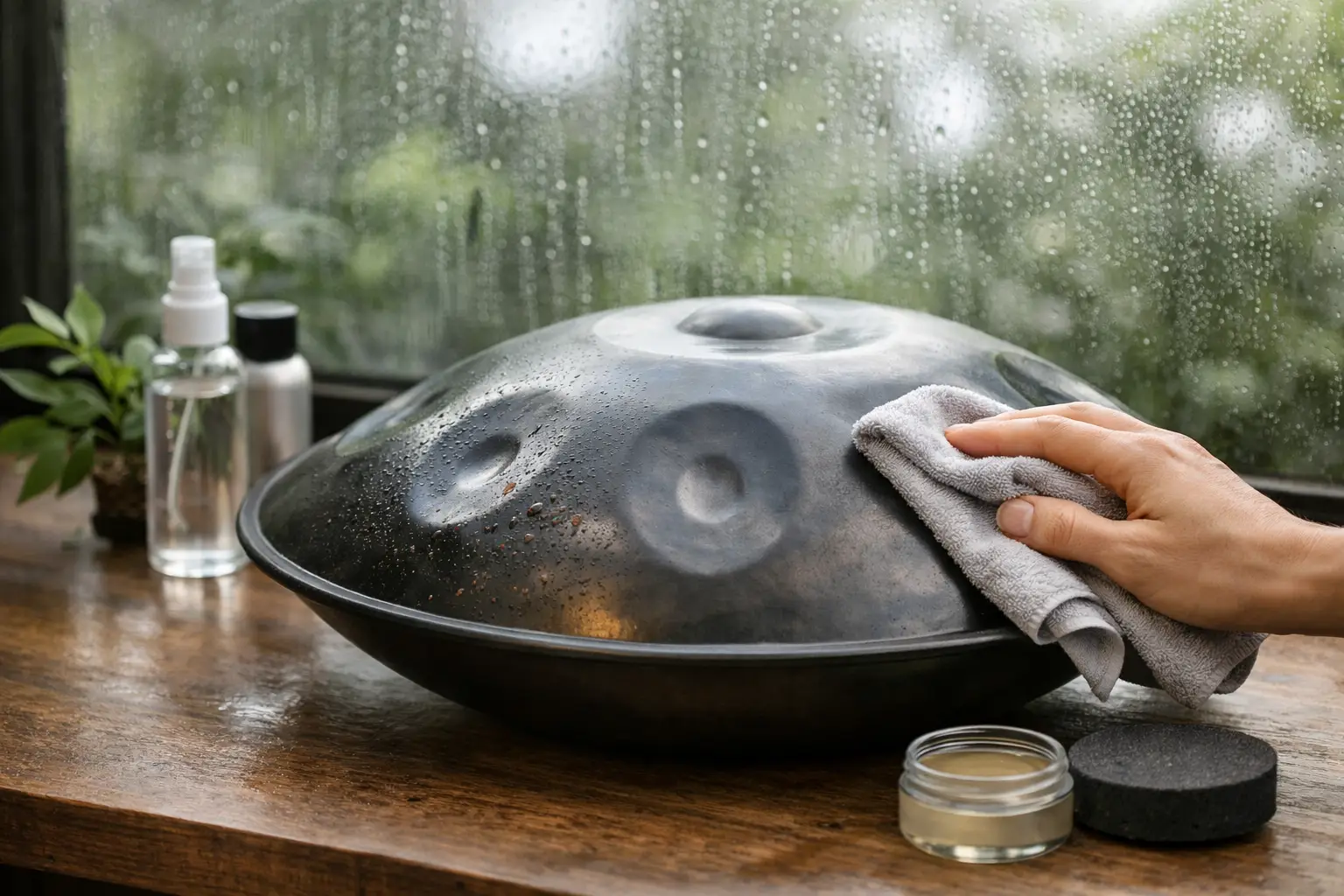
How to Stop Handpan Rusting in Humid Weather
How to Stop Your Handpan from Rusting
A handpan can carry a room with only a few gentle notes, but it is still made from steel. Leave fingerprints, salt air or trapped moisture sitting on its surface for long enough and that beautiful finish can begin to change. Knowing how to stop handpan rusting is less about constant polishing and more about building a few calm, consistent habits around playing, cleaning and storage.
Rust does not mean you have failed as a player, and a small spot is not necessarily a disaster. The key is to notice it early, treat it gently and give your instrument the conditions it needs to keep resonating freely.
Why handpans rust
Rust is a reaction between iron, oxygen and water. Handpans are usually made from treated steel, but treatments are not a force field. Humidity, rain, sea air, sweat and even damp fabric inside a case can create the conditions corrosion needs.
For Australian and New Zealand players, climate makes a real difference. A handpan played in coastal Sydney, Brisbane or Darwin may need more frequent care than one kept in a dry inland home. The same applies during long wet spells, or when an instrument moves from air-conditioning into warm outdoor air and develops condensation.
Your handpan’s material and finish matter too. Nitrided steel has a hardened surface treatment and is widely valued for its warm, earthy character, but it can still rust if moisture is left on it. Stainless steel is generally more corrosion-resistant and often suits humid conditions well, yet it is not completely immune to staining or surface corrosion. Raw, painted or differently coated instruments may have their own care requirements, so the maker’s advice should always take priority.
How to stop handpan rusting after every play
The most effective rust prevention takes less than a minute. After playing, use a clean, soft microfibre cloth to wipe the playing surface, the rim and the underside. This removes moisture, skin oils and salts before they have a chance to settle into the metal.
Pay attention to the areas your hands reach most often. The centre note, tone fields and rim can all collect traces of sweat, particularly in a long sound healing session, an outdoor performance or a warm afternoon practice. If the handpan feels damp from rain or condensation, dry it immediately and allow it to sit uncovered in a dry room for a little while before putting it back in its case.
Avoid using paper towel, rough cloths or abrasive kitchen sponges. They can leave fine scratches that make the surface harder to protect. Also skip household cleaning sprays, alcohol wipes, metal polish and products containing harsh solvents. A handpan is not cookware or a car panel. Strong cleaners may damage its protective finish, alter its appearance or leave residue around the notes.
Use a light protective oil, not a heavy coating
Most handpans benefit from a very thin layer of a suitable rust-preventive oil. Choose a product specifically recommended for handpans or musical instruments, particularly if you play with bare hands. Apply a few drops to a soft cloth rather than pouring oil directly onto the shell, then spread it lightly over the entire instrument.
The aim is a nearly invisible protective film, not a glossy, slippery surface. Too much oil can feel unpleasant under the hands, attract dust and collect in the small contours of the tone fields. After applying it, use a second clean cloth to buff away any excess.
How often should you oil a handpan? It depends on its material, the local climate and how often it is played. In a dry home, once every few weeks may be enough. In a humid or coastal area, a light weekly check is sensible, especially for nitrided steel. If your hands perspire heavily or you use the instrument outdoors often, wipe and protect it more regularly.
Do not reach for general-purpose lubricants such as WD-40. They are made for mechanical tasks, not for an instrument you touch closely and play for long periods. They can leave an odour, residue or finish that is difficult to remove.
Store your handpan where moisture cannot linger
A quality hard case protects a handpan from knocks, but a closed case is not automatically a dry case. Putting an instrument away while it is damp can trap humidity against the steel for days. Always make sure the handpan and its case interior are dry before closing the zip.
Choose a stable indoor storage spot away from direct sunlight, heaters, open windows and damp exterior walls. Avoid garages, sheds, car boots and verandahs where temperature and humidity can swing dramatically. A handpan left in a hot car can also become dangerously hot, while sudden cooling afterwards may encourage condensation.
If you live near the coast or in a very humid region, consider placing reusable silica gel packs in the case pockets, provided they cannot touch or rub against the instrument. Recharge or replace them as directed. A small room dehumidifier can be worthwhile if you keep several instruments, or if your music space regularly feels damp.
There is a balance here. An instrument should be protected, but not hidden away so completely that you stop noticing its condition. Take it out regularly, let it breathe in a dry room and give it a quick visual check. That small ritual can become part of reconnecting with your sound.
Be careful with outdoor playing and travel
Handpans belong in quiet rooms, on stages, in yoga studios and sometimes beneath open skies. Outdoor playing is possible, but weather awareness is part of caring for the instrument.
Do not play in rain, mist or heavy dew, even briefly. If a surprise shower arrives, move the handpan into a dry space, wipe it down thoroughly and let it air dry before oiling it lightly. Covering a wet handpan with a bag or case is a common way to trap the very moisture you are trying to remove.
After taking a handpan from a cool air-conditioned space into humid heat, wait a few minutes before playing. If condensation appears, wipe it off. The same goes for returning indoors after an evening performance. Temperature changes can be more troublesome than a player expects.
For travel, use a well-fitted hard case and do not stack heavy gear on top of it. Once you arrive, open the case when practical and check for moisture. A case that has been left in a damp vehicle overnight deserves particular attention.
What to do if you find a rust spot
A small orange-brown mark can be unsettling, especially on a much-loved handpan. Start gently. Wipe the area with a dry microfibre cloth and inspect it in good light. Sometimes what looks like rust is surface residue, but if the mark remains, do not aggressively scrub it or use sandpaper, steel wool or abrasive polish.
Light surface corrosion may respond to a handpan-safe cleaning approach recommended by the maker, followed by careful drying and a thin oil layer. However, deeper rust, pitting, flaking or marks close to a note field deserve professional advice. Overzealous cleaning can affect the surface treatment and, in severe cases, compromise the look or feel of the instrument.
If you are unsure, take clear photos before trying anything. A specialist handpan maker or a dedicated retailer such as Handpans Australia can help you understand whether the issue is cosmetic surface rust or needs more careful assessment.
Prevention is kinder than restoration
Restoring a heavily rusted handpan is rarely a simple cosmetic job. The steel surface, protective treatment and precise tuning all work together. That is why gentle prevention is the better path: dry hands and instrument, a clean cloth, a light protective oil and a dry place to rest between sessions.
Your handpan does not need perfection from you. It needs attention. Wipe it down after the final note, keep moisture out of its case and let care become part of the pause after playing – a quiet way of preserving the resonance that keeps calling you back.