

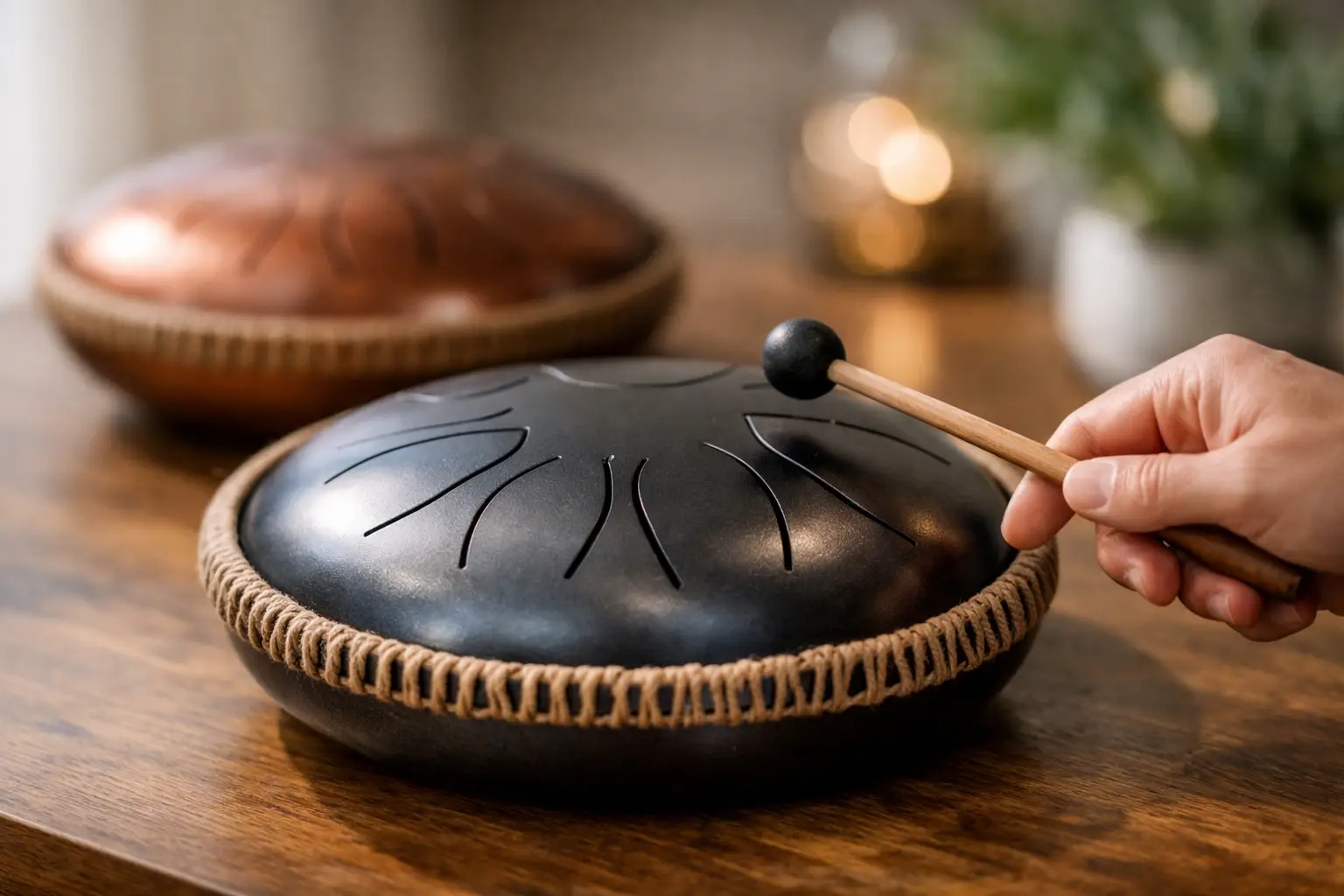
How Tongue Drum Quality Shapes Every Note
Tongue Drum Quality: How It Shapes Every Note
A tongue drum can look beautiful on a shelf and still leave you cold the moment you play it. The real measure of tongue drum quality arrives with the first gentle strike: does the note bloom clearly, linger with warmth, and invite your hands back for another phrase? For a beginner, a meditation practitioner or a seasoned musician, that response is what turns a steel instrument into a trusted creative companion.
A well-made tongue drum is wonderfully accessible. You do not need years of theory to create a calming pattern or find a melody that feels like your own. Yet the simplicity of playing should not be confused with simplicity of construction. The best instruments balance careful tuning, responsive steel and thoughtful design so every note feels connected to the next.
Tongue Drum Quality Begins With the Sound
The clearest sign of quality is accurate, stable tuning. Each tongue is cut and shaped to produce a particular note, and those notes must sit comfortably together as a scale. When tuning is precise, even an unplanned sequence of notes has a sense of ease. You can slow down, repeat a rhythm, play with a friend or improvise freely without constantly encountering a note that jars.
Listen for a clean fundamental pitch – the main note your ear recognises – supported by gentle overtones rather than a wash of metallic noise. Some shimmer is part of the character of steel, but it should add colour rather than obscure the melody. A note that sounds muddy, rattly or sharply discordant can break the reflective mood many players seek from a tongue drum.
Sustain matters too, although more sustain is not automatically better. A long, singing note can create spacious soundscapes for meditation, yoga or quiet solo playing. A slightly shorter, more focused decay may suit rhythmic playing, classroom use or ensemble music, where too much ringing can blur the pulse. Quality means the sustain is controlled and musical, with notes fading naturally instead of cutting out abruptly.
Notes Should Feel Even Under the Mallet
Play each tongue softly and then with a little more energy. On a quality drum, the notes should respond without requiring a hard hit. The low notes may naturally need a touch more weight than the higher ones, but no tongue should feel stubborn or dramatically quieter than its neighbours.
This balance is particularly valuable for new players. If one or two notes are difficult to activate, people often compensate by striking harder, which can make their playing tense and noisy. A responsive instrument lets the hands relax. It makes space for subtle dynamics, from a near-whisper to a brighter rhythmic accent.
Steel, Shape and Craftsmanship
Tongue drums are often made from carbon steel or stainless steel, and each material has its own personality. Carbon steel commonly offers a warm, earthy voice with a rounded attack. It can be deeply expressive, but it needs conscientious care because moisture may lead to rust if the surface is neglected.
Stainless steel is valued for its resistance to corrosion, a practical advantage in Australia’s humid coastal areas or for players taking their instrument outdoors. Its sound can be bright, clear and sustained, though the exact character depends on the maker’s design and tuning. Material alone does not decide quality. The thickness of the steel, the shape of the shell, the tongue layout and the maker’s skill all influence what you hear.
Look closely at the finish as well. A smooth, even surface is not merely cosmetic. It suggests care in preparation and helps make the drum comfortable to handle. The tongue edges should be neatly finished, with no sharp burrs or rough areas. A durable protective coating, oil treatment or corrosion-resistant steel helps preserve the instrument’s appearance and voice over time.
Construction should feel solid in the lap or on a stand. There should be no loose components, unexplained buzzing or movement around the sound hole. Small details reveal a great deal: tidy joining, a stable base and a well-fitted protective bag all make it easier to bring the drum into daily life rather than leaving it tucked away.
The Scale Is Part of the Quality Experience
Two instruments can be beautifully built, accurately tuned and still feel very different because of their scales. This is why tongue drum quality is also about whether the musical layout supports the experience you want to create.
A pentatonic scale is often a welcoming choice for beginners because many note combinations sound naturally pleasing. It is ideal for intuitive playing, gentle musical exploration and moments when you simply want to follow your mood. Major scales tend to feel open and uplifting, while minor scales can offer introspection, tenderness or a more cinematic atmosphere.
For sound healing or meditation settings, consider the emotional pace of the scale as much as the note names. Do you want a bright, reassuring voice to carry a group session, or a deeper, slower resonance for personal grounding? For performers, the useful question may be whether the drum sits well with handpan, Native American flute, guitar or voice.
A quality maker presents the scale as part of the instrument’s identity, not as an afterthought. The notes should be arranged logically enough that your hands can learn patterns over time. Numbered or marked tongues can be helpful for beginners, though many players eventually navigate by ear and feel.
How to Assess a Tongue Drum Before Choosing
When possible, give yourself time to hear the instrument played in more than one way. A polished product photo cannot tell you how a note opens, how long it rings or whether the tones blend. Listen to a full scale played slowly, then to simple melodies and rhythmic patterns. Pay attention to whether your body relaxes into the sound or whether certain notes pull your attention for the wrong reason.
If you are playing in person, test it with both mallets and fingertips if the drum is designed for hand playing. Mallets usually offer a clear, rounded attack, while fingertips reveal how sensitive the tongues are. Try alternating between nearby notes. They should remain distinct rather than collapsing into a confused metallic hum.
It also helps to consider the drum’s role in your life. A compact model is easy to take to the beach, a park session or a friend’s place, but a larger drum may provide lower notes and more tonal depth. Neither is inherently superior. The better choice is the one you will genuinely reach for.
For a first instrument, do not feel pressured to choose the most complex scale or the largest number of notes. Fewer, well-tuned notes can be more inspiring than a crowded layout that feels overwhelming. Experienced players may want additional range, alternative scales or a specific tonal centre, but the same principle remains: clarity and connection come first.
Care Protects the Voice You Chose
Even excellent tongue drums benefit from gentle care. Wipe away fingerprints and moisture after playing, especially on carbon steel. Store the instrument in its case or bag when travelling, and avoid leaving it in direct sun, a hot car or damp conditions for long periods. Extreme heat and rapid temperature changes are not kind to tuned steel.
Use the mallets supplied or recommended for the instrument. Hard beaters can create an overly sharp sound and may mark the finish. A light, relaxed stroke will usually produce more music than force ever can.
A quality tongue drum should make you want to pause, listen and play again. Whether it becomes part of a morning ritual, a yoga class, a songwriting session or a quiet evening at home, choose the voice that feels alive in your hands. That is where an instrument moves beyond an object and becomes part of your own rhythm.