

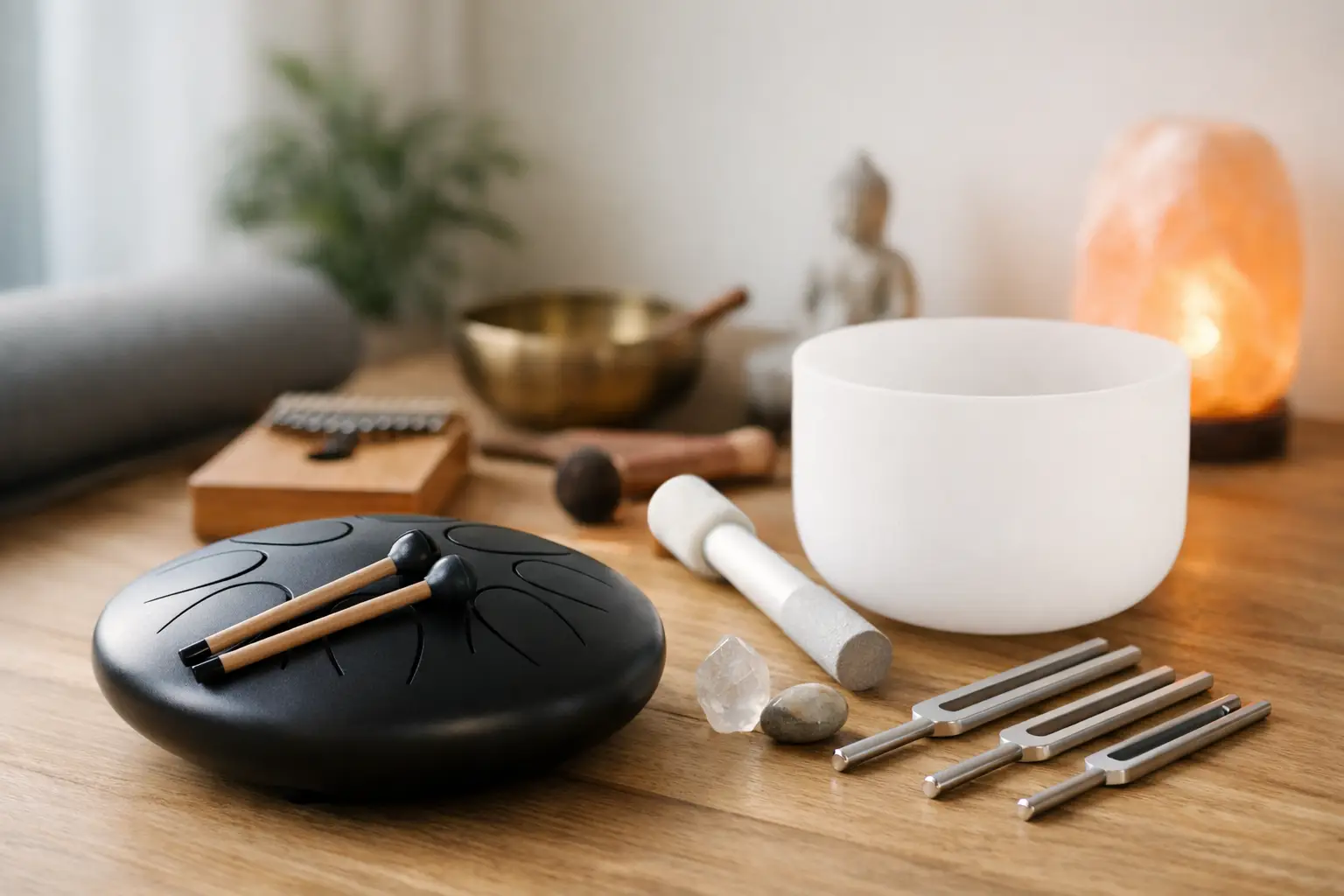
Wellness Instruments That Invite You to Play
A few quiet notes can change the feel of a room. Not because music needs to fix anything, but because giving your hands, ears and attention one gentle place to land can be deeply restorative. Wellness instruments such as handpans, tongue drums and Native American flutes offer that invitation: make a sound, follow its resonance, then see where the next note takes you.
For many people, this is a more natural path into music than lessons, sheet music or the pressure to perform. A handpan on your lap, a tongue drum beside a yoga mat, or a flute played in the late afternoon can turn a few spare minutes into a creative ritual. The aim is not perfection. It is presence, curiosity and a sound that feels like your own.
What makes an instrument feel supportive?
An instrument can be beautifully made and still not suit the way you want to play. When people speak about musical wellbeing, they are often describing a particular experience: sound that is immediately pleasing, an accessible way to create rhythm and melody, and enough expressive depth to keep returning to it.
Handpans, tongue drums and Native American flutes each offer this in different ways. Their voices are acoustic, tactile and responsive. You do not need an amp, a screen or a large setup to begin. You simply need a little time and permission to make imperfect sounds.
That accessibility matters. A beginner may enjoy a handpan because its notes are arranged to work together, making improvisation feel less intimidating. An experienced musician may value the same instrument for its shifting overtones, dynamic range and the way it holds space in an ensemble. The instrument has room to grow with the player.
Wellness instruments are not all the same
Choosing by appearance alone can lead to an instrument that sits unused. It helps to consider the kind of musical moment you want to create, whether that is private reflection, group facilitation, songwriting, meditation or performance.
Handpans for rhythm, melody and immersion
A handpan is a resonant steel instrument played with the hands. Its central note and surrounding tone fields create a musical layout that rewards exploration. Light taps can produce bell-like melodies; firmer strokes bring out pulse and percussion. The sound has a spacious quality, with notes often continuing to bloom after your hands have lifted away.
For a personal practice, a handpan can be wonderfully absorbing. You might begin with a slow pulse, repeat a simple phrase, then let the pattern loosen as your attention settles. Because scales are selected for musical compatibility, you can often create a coherent mood without needing to understand chord theory first.
There is a trade-off, though. Handpans are finely crafted instruments and deserve considered handling, storage and transport. They are also a more significant investment than many entry-level instruments. For the player who feels drawn to their rich sustain and percussive expression, that care is part of the relationship. For someone wanting a smaller, lower-commitment starting point, a tongue drum may be a better fit.
Tongue drums for an easy first ritual
Tongue drums produce clear, rounded notes when struck with fingers or mallets. Their compact size and gentle response make them inviting for beginners, children, educators and anyone who wants music close at hand. Place one on a coffee table or take it outside, and it is ready when inspiration appears.
They generally offer less dynamic complexity than a handpan, but that simplicity is often the point. A tongue drum gives you an uncomplicated way to build a few minutes of melodic play into a morning routine, a classroom activity or a quiet wind-down. With soft mallets, the sound can remain delicate and even. With fingers, it becomes more direct and personal.
Native American flutes for breath-led expression
A Native American flute brings breath into the musical process. Its warm, open tone encourages slower phrasing, where pauses carry as much feeling as notes. For players who connect with singing, wind instruments or spacious melody, it can become a powerful companion for solo playing.
It does ask for a different kind of learning. Breath control, embouchure and finger placement take practice, even when the instrument is designed to be approachable. That gradual learning can be satisfying rather than frustrating, especially if you enjoy hearing your tone develop over time.
These flutes also belong to living cultural traditions. Playing with care means learning about the instrument’s origins, choosing respectful language and appreciating that the music is more than a decorative backdrop for wellbeing. A thoughtful player can hold both the personal experience of making music and respect for the traditions connected to the instrument.
Choosing a sound that suits your intention
Start with the feeling you want from your practice, rather than the idea of what you should play. If you want enveloping resonance and the freedom to weave rhythm with melody, a handpan may be calling you. If you want an accessible instrument for short, regular moments of play, a tongue drum can make starting easier. If breath, melody and spacious phrasing appeal, a flute may offer the connection you are looking for.
The scale or tuning matters too, particularly with handpans and tongue drums. Some scales feel bright and buoyant; others are earthy, contemplative or bittersweet. There is no universally calming scale. What feels grounding to one person may feel sombre to another. Listening carefully to recordings can help, but the most meaningful choice is often the sound that makes you want to play another note.
Think about your environment as well. A full-sized handpan is portable enough for a beach gathering, a retreat or a small performance, yet it needs a protective case and sensible care. A tongue drum is easier to carry around the home or pop in the car. A flute is light and discreet, although it benefits from a place where you can play without worrying about disturbing others.
Building a musical wellbeing practice without pressure
The most lasting practices tend to be small enough to repeat. Rather than setting out to play for an hour, try sitting with your instrument for five minutes at the same time each day. Begin by listening to the room. Then play one note and wait until its resonance fades. Add another only when it feels right.
A handpan player might keep a slow alternating rhythm between the central note and two surrounding notes. A tongue drum player might repeat a four-note pattern until it becomes familiar, then change one note. A flute player might hold a single warm note, focus on an unforced breath, and allow a simple melody to emerge.
There is no need to label this as meditation, sound healing or practice unless those words genuinely suit you. It can simply be a moment of music. If you use an instrument in a yoga class, wellness session or group setting, present it as an artistic and sensory experience rather than a replacement for professional health care. Music can support reflection and connection, but it should not carry promises it cannot keep.
Recording yourself occasionally can be useful, not as a judgement, but as a way to notice growth. You may hear a steadier pulse, more confident touch or a phrase worth returning to. Over time, those small discoveries become your musical vocabulary.
Let the instrument meet you where you are
The right instrument does not demand that you arrive as a musician. It gives you a starting point and responds as you become one. At Handpans Australia, the joy is in helping players find that first resonant connection, whether it begins with the deep, shimmering voice of a handpan, the friendly clarity of a tongue drum or the breathy warmth of a flute.
Choose the sound that makes you pause. Make room for a few unplanned notes. A meaningful musical practice can begin there, with your hands, your breath and the simple pleasure of listening.