

What Is a Hang Drum and Why Does It Resonate?
What Is a Hang Drum? Origins, Sound & More
A hang drum has a way of changing the atmosphere before a melody has even settled. One gentle strike can bring out a warm, rounded note, followed by a shimmer of overtones that seems to hang in the room. For people drawn to music as a place of calm, expression or connection, that immediate response is part of the appeal.
Yet the name is often used loosely. If you are searching for a hang drum in Australia, you will usually be looking for a handpan: the expressive, steel, played-by-hand instrument heard in meditation spaces, intimate performances and spontaneous backyard sessions. Understanding the distinction can help you choose an instrument with clearer expectations and a sound that genuinely suits the way you want to play.
Hang drum or handpan: what is the difference?
The Hang was the original instrument developed in Switzerland by Felix Rohner and Sabina Schärer of PANArt in 2000. Its name is protected, and it refers specifically to the instruments made by that original maker. The word “Hang” comes from the Bernese German word for hand, which feels fitting for an instrument whose voice is shaped directly by touch.
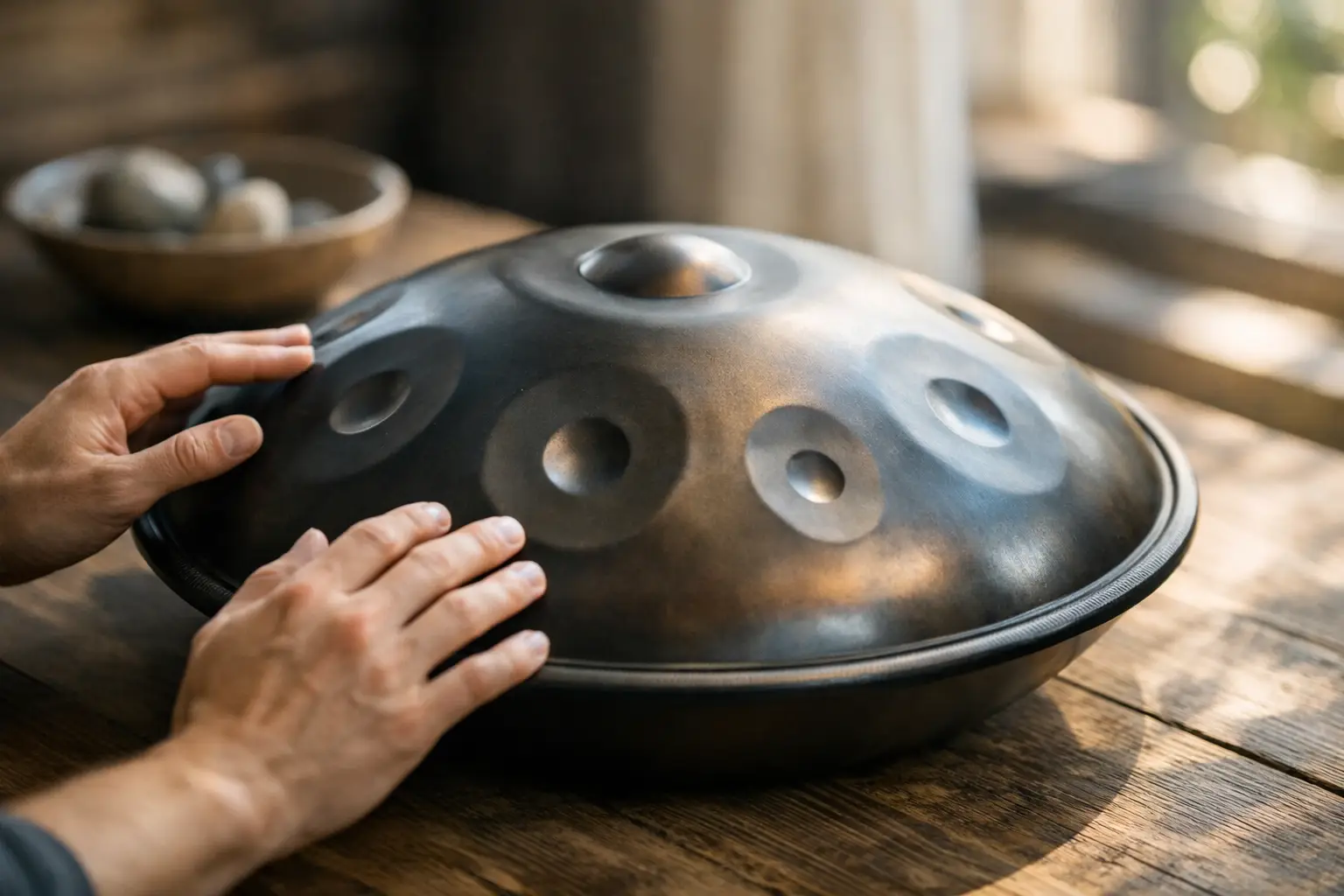
A handpan is the broader name for the family of instruments inspired by that original design. Handpans are generally made from two shaped steel shells joined at the rim. The upper shell carries a central note, often called the ding, surrounded by carefully tuned tone fields. The lower shell usually has an opening called the gu, which contributes to the instrument’s rich, breathing resonance.
In everyday conversation, people may use hang drum, handpan or even handpan drum to mean the same thing. But when comparing instruments, the term handpan is more accurate. It also opens up a far wider world of makers, scales, steel types and playing styles.
Why a handpan feels so immediate
Many instruments ask you to learn a technical language before they offer a satisfying musical response. A handpan meets you earlier. Its notes are arranged in a scale, so a beginner can explore rhythm and melody without constantly landing on a wrong note.
That does not make it a simple instrument. It makes it inviting. A single player can create a low pulse with the ding, place a melody around it, add soft taps near the rim and leave space for the sound to decay. The result can feel like percussion and song happening at once.
The experience is physical as well as musical. Fingers, thumbs and the heel of the hand each produce a different character. A light touch can bring clarity and sparkle; a fuller strike can create a rounded, earthy thump. Over time, players develop their own relationship with the instrument, whether that means slow, spacious phrases for private practice or driving patterns for a live set.
For wellness practitioners, yoga teachers and sound-focused facilitators, the handpan’s gentle attack and sustained resonance can sit beautifully beneath breathwork, movement or quiet reflection. It should not be treated as a medical tool or a replacement for professional care, but it can be a meaningful part of a calming, intentional environment.
The sound begins with the scale
Choosing a scale is often the most personal part of finding a handpan. The scale determines the emotional colour of the instrument and the pathways available when you improvise. There is no universally best option. The right choice depends on whether you want grounding, brightness, drama, rhythmic energy or a mixture of these qualities.
Minor scales are popular for their introspective, cinematic sound. They can feel deep and contemplative, making them a natural fit for solo playing, meditation and slow melodic exploration. A D Kurd handpan, for example, is often chosen for its versatile, soulful voice. It can carry a simple rhythm just as comfortably as a reflective melody.
Major and brighter scales tend to feel open, uplifting and playful. They can suit group settings, relaxed outdoor playing and musicians who want a sunnier harmonic palette. Other scale families may lean more exotic, dreamy or percussive. The names can seem technical at first, but your ears should lead the decision. Listen for the scale that makes you want to sit down and keep playing.
The number of notes matters too. An instrument with eight or nine notes can be wonderfully clear and approachable. Fewer notes mean less visual and musical clutter, which some beginners find freeing. Handpans with more notes offer greater melodic range and harmonic possibility, but they can require more thoughtful navigation and usually come at a higher price.
Low notes, high notes and room to breathe
A lower-pitched handpan often feels warm, spacious and grounding. Its notes can fill a room with very little effort, though larger instruments may be less convenient to carry. Higher-pitched models are often more compact and articulate, with a brighter voice that can cut through gently when playing alongside other acoustic instruments.
Neither is inherently better. If you picture playing alone at home, a mid-range scale may offer a comfortable balance of warmth and clarity. If you perform with flutes, strings or other percussion, consider where the handpan will sit in the overall sound. A handpan does not need to dominate to be heard.
Craftsmanship is heard, not just seen
A handpan is not simply a steel shell with notes pressed into it. Each tone field must be shaped and tuned with extraordinary care, then balanced against the voice of the entire instrument. The goal is not only for every note to be in tune on its own, but for the notes to resonate together with clarity, warmth and control.
This is why prices vary so widely. Quality steel, skilled tuning, careful heat treatment and the time required to refine an instrument all affect the finished result. A well-made handpan can offer clean sustain, stable tuning and a responsive feel under the fingers. A poorly made one may sound harsh, muddy or uneven, and can lose its tuning more easily.
It is worth being patient with this decision. Recordings are useful, but listening through a mobile or laptop cannot fully convey the low end, dynamic range and physical resonance of a handpan. Where possible, hear examples through decent headphones and pay attention to whether the notes remain clear when played in sequence. You are listening for more than a beautiful first strike. You are listening for an instrument that continues to reveal itself.
Choosing your first handpan with confidence
Start with your intended relationship to the instrument rather than chasing the largest note count or the most unusual scale. Do you want an easy companion for evening practice? A rhythmic instrument for songwriting? A grounding voice for small wellness sessions? A distinctive layer in your existing musical work?
Then consider practical details. A handpan needs a protective case for transport, especially if it will travel in the car or come along to classes and gatherings. It should be kept dry and handled with clean hands. Depending on the steel and finish, regular light care may be needed to protect the surface from rust. Never leave it in a hot car, near salt air without protection or somewhere it can be knocked from a stand.
Beginners do not need a percussion background to start well. Begin by finding a relaxed, rebounding touch rather than hitting hard. Let each note speak. Play a steady pulse, then answer it with two or three notes around the centre. Record a few minutes of your playing occasionally. You will hear progress in your timing, dynamics and confidence long before you feel like you know what you are doing.
A place for practice, not pressure
One of the quiet gifts of the handpan is that it does not demand a performance every time you pick it up. Five unhurried minutes before work, a melody after a difficult day or a shared rhythm with a friend can all be enough. Formal lessons and technique will deepen your playing, especially if you have musical goals, but curiosity is a valid place to begin.
For experienced musicians, the same openness creates room to experiment. Handpans can pair beautifully with Native American flutes, voice, acoustic guitar, strings and subtle electronic textures. The key is to leave room for its sustain. Too much density can flatten the very resonance that makes the instrument compelling.
A hang drum search may bring you to the handpan, but the lasting connection comes from something more personal: finding a scale whose notes make you pause, listen and answer back. Choose the instrument that invites your hands to return, then give yourself permission to learn its language one resonant phrase at a time.