

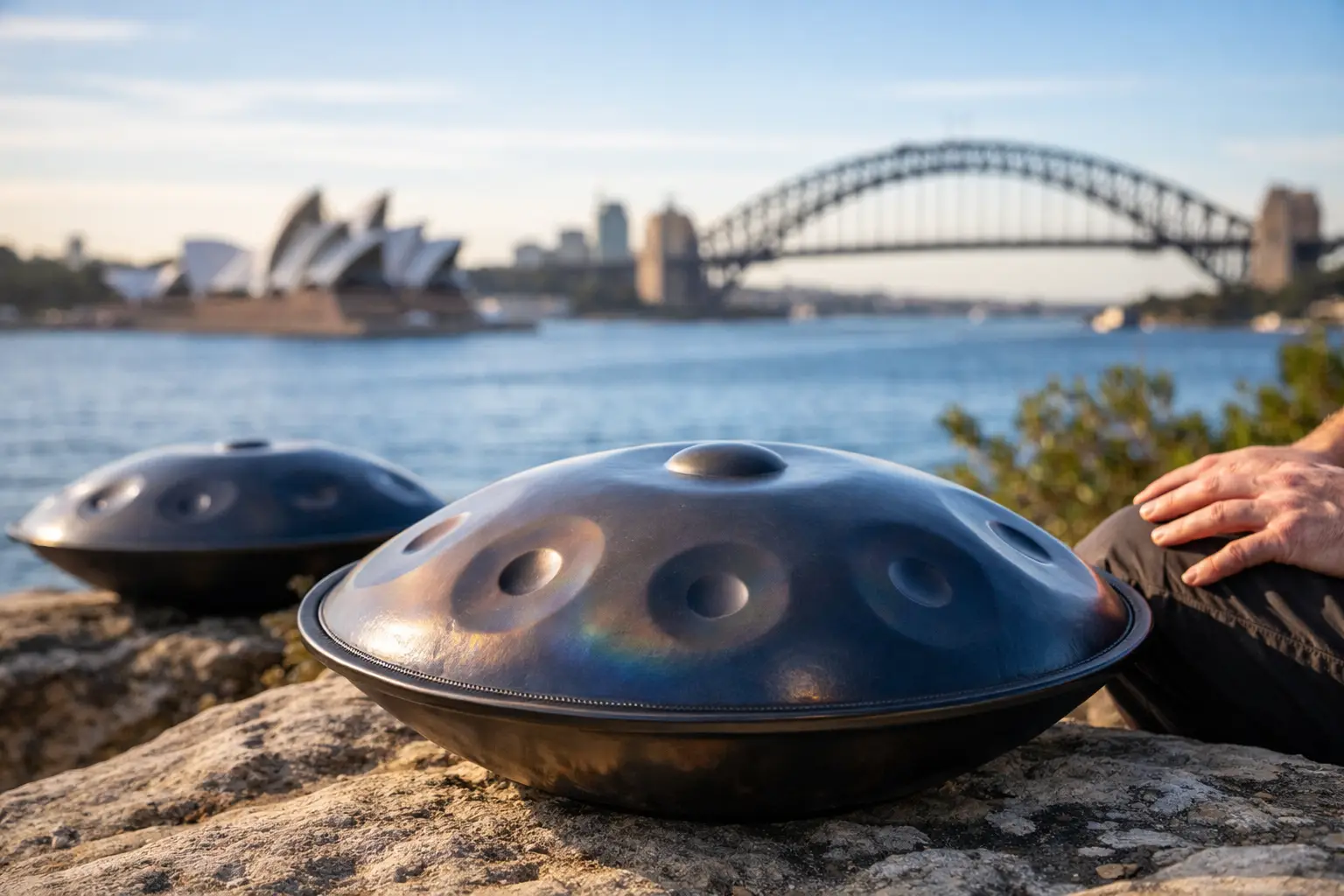
Are Chinese Made Handpans Worth Playing in Australia?
A handpan’s first note can feel less like percussion and more like a small moment of stillness. It rings beneath your fingertips, inviting rhythm without demanding that you know the rules first. For players considering Chinese-made handpans, the real question is not simply where an instrument was made. It is whether its sound, tuning and feel give you a genuine place to begin – or deepen – your musical practice.
China now plays a significant role in the global handpan market. There are large-scale factories, smaller workshops, experienced independent makers and everything between. That variety has made handpans more accessible to Australian players, but it has also made thoughtful selection more valuable. Two instruments made in the same country can feel entirely different in the hands.
Why Chinese-made Handpans Deserve a Closer Listen
The handpan world once felt highly exclusive. Instruments were difficult to find, production was limited, and prices often placed them beyond the reach of many curious players. Chinese manufacturing helped change that. More people can now bring home a melodic steel instrument for meditation, songwriting, group music-making or simply a quiet evening on the verandah.
Accessibility is a meaningful benefit, particularly for beginners who are unsure whether the handpan will become a lifelong companion. A well-chosen entry-level instrument can offer warm resonance, intuitive note layouts and plenty of room for musical discovery without the price of a premium custom build.
Still, “Chinese-made” is not a measure of quality on its own. It is a description of origin, not a verdict on craftsmanship. Some Chinese-made handpans are carefully built, consistently tuned and musically expressive. Others are produced quickly, with less attention to tuning stability, finish or note separation. The same is true of instruments made in many other parts of the world.
The more useful question is: how has this particular handpan been designed, tuned and checked before it reaches you?
What Shapes the Quality of a Handpan?
A handpan is deceptively complex. Its calm, flowing sound relies on careful metal shaping, precise tuning and a sensitive relationship between every note. A small compromise in one area can change the whole playing experience.
Steel and construction
Most handpans are made from either stainless steel or nitrided steel. Stainless steel is often valued for its sustain, soft warmth and spacious, lingering voice. It can suit slow, reflective playing, sound healing settings and players who enjoy letting notes bloom into silence.
Nitrided steel is commonly appreciated for its crisp attack, earthy character and clearer rhythmic response. It may feel more direct under the hands, especially for faster patterns and percussive playing. Neither is automatically better. The right material depends on the sound you want to live with.
The quality of the shell shaping matters just as much. A well-built instrument should feel solid without becoming heavy or unresponsive. Its tone fields should respond at a light touch rather than forcing you to strike hard. When a handpan asks for gentleness, it gives you a wider range of expression.
Tuning accuracy and stability
A handpan note is not only one pitch. It contains a central fundamental tone and carefully tuned harmonics that create the instrument’s recognisable shimmer. When these elements are well balanced, notes sound rounded and clear. When they are not, the sound can feel thin, wobbly, harsh or cluttered.
Tuning stability is equally important. Every handpan can move slightly over time, especially after heavy playing, knocks or big temperature changes. But a thoughtfully made instrument should hold its tuning through normal use. Very cheap instruments can sometimes sound appealing in a short video, then reveal unstable notes after regular playing.
For Australian conditions, care also matters. Avoid leaving a handpan in a hot car, direct summer sun or a damp garage. Use a quality case for transport, wipe fingerprints away after playing and follow the maker’s care advice for the steel type. A little attention helps protect both finish and tone.
Scale choice and note layout
A beautiful handpan is not necessarily the right handpan for you. The scale determines its emotional landscape: bright and uplifting, deep and contemplative, mysterious, hopeful or rhythmic. Minor scales are often loved for their introspective character, while major and mixed scales can feel open, joyful and song-like.
For a first instrument, fewer notes can be a gift rather than a limitation. An eight or nine-note handpan often feels spacious and forgiving. The notes are arranged to work together, so even simple patterns can sound musical. More notes offer extra colour and range, but may require more listening and control to use well.
Before choosing, imagine where the instrument will sit in your life. A slow, resonant scale may suit yoga, meditation or solo reflection. A tighter, punchier instrument might better suit busking, recording or playing beside guitars and other percussion. There is no universal best scale, only the one that keeps drawing you back to play.
Who Might Enjoy a Chinese-made Handpan?
Chinese-made instruments can be an excellent fit for a beginner seeking a reliable first handpan, a musician wanting a second scale, or a wellness practitioner adding gentle live sound to sessions. They can also suit experienced players who care more about a particular tone, layout or budget than a maker’s name on the shell.
The trade-off usually comes down to consistency and refinement. At the more affordable end, you may find a lovely instrument with slightly less sustain, less nuanced dynamic range or a more basic finish than a high-end handpan made in a specialist studio. That does not make it unmusical. It simply means you should judge it honestly, based on the experience it offers.
For a professional performer or recording artist, investing in a more refined instrument may be worthwhile. Nuanced touch, clean note separation and dependable tuning become especially noticeable under microphones or alongside other instruments. For personal creativity, however, the handpan that inspires you to sit down and play often matters more than a prestige label.
How to Assess a Handpan Before You Buy
Photos can show colour and shape, but they cannot tell you whether notes blend beautifully or whether a shell feels alive beneath the fingers. Sound samples and clear product information are essential, particularly when buying online in Australia.
Look for these practical signs of a thoughtfully selected instrument:
- A clean, unedited sound demonstration that includes each note played softly and more firmly, not only a polished performance.
- Clear scale and frequency details, so you know what notes you are receiving and how the instrument is intended to sound.
- Even response across the tone fields, with no obviously dead, rattling or metallic notes.
- Information about steel, care and tuning, rather than vague promises about “professional quality”.
- A protective case and sensible after-sales support, because transport and future questions are part of handpan ownership.
Listen with headphones if possible. Notice whether the notes remain distinct when played together and whether the ding, the central note, anchors the instrument with a satisfying low voice. A little background resonance is natural. Excessive ringing or notes that blur into each other can make it harder to create clear rhythms.
It is also worth paying attention to your own physical response. Does the tone feel calming? Do you want to answer one note with another? Can you picture yourself playing it after a long workday, before a meditation class or with friends around a fire? A handpan is a sensory instrument. Your connection to its voice is useful information.
Price, Value and Honest Expectations
A lower price can be a sensible starting point, but the cheapest option is not always the best value. If the tuning is poor, the sound is uninspiring or the instrument arrives without meaningful support, it may spend more time in its case than in your hands.
Value comes from the balance between sound quality, build care, tuning, scale, protection and the confidence to play it regularly. A well-selected Chinese-made handpan can offer that balance beautifully. It can become a first doorway into melodic percussion, a dependable creative companion or a fresh voice beside instruments you already play.
At Handpans Australia, the focus is not on treating handpans as a novelty. It is on helping players find an instrument with a sound they can return to, whether they are learning their first simple rhythm or bringing years of musical experience to a new form of expression.
Let Your Ears Lead the Choice
Country of manufacture can be part of the story, but it should not be the whole story. Listen for clarity, warmth and a tone that feels comfortable in your own hands. Ask practical questions about tuning and care. Then give yourself permission to choose the instrument that makes you pause, take a breath and play one more pattern before you put it away.